Chevrolet Colorado & GMC Canyon Key Fob Programming in Arlington TX
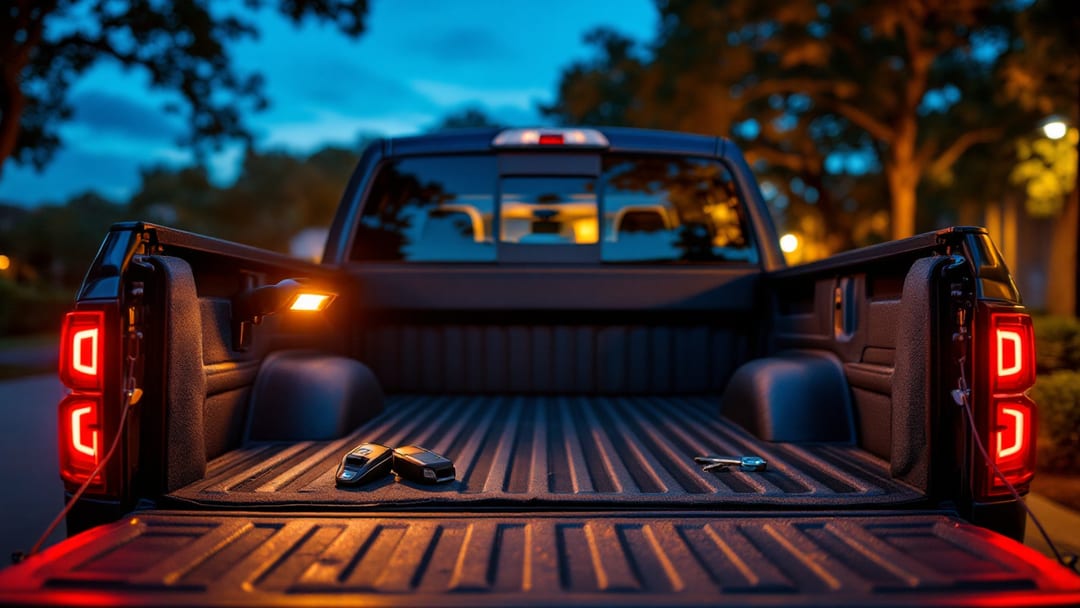
As of July 2026, a Chevrolet Colorado or GMC Canyon key fob programmed on-site in Arlington runs roughly $170 to $330 for a spare and more when every key is lost — call or text (817) 330-5762 and we will price it against your exact year. These two trucks are mechanical twins wearing different badges, they are everywhere on Arlington job sites and school runs, and they split mid-generation between two completely different key architectures. Knowing which one you own is the difference between a twenty-minute job and a two-hour one.
First, identify which key system your truck uses
This single question determines the price, the tooling and the time on site.
Blade key with a transponder chip. Look at the steering column. If there is a keyhole, you have a mechanical ignition. The key blade is cut to your locks and a chip in the head answers the anti-theft system. On some trims the remote lock and unlock buttons live in a separate fob on your ring; on others they are built into the key head.
Proximity smart fob with push-button start. No keyhole, a start button on the dash. The fob stays in your pocket and the truck detects it by radio. There is a hidden emergency blade inside the fob for the door, and a backup pocket or start-button contact point for when the fob battery dies.
Owners get this wrong on the phone more often than you would expect, particularly when they bought the truck used and have only ever carried one key. Thirty seconds looking at the column saves everyone a wasted trip.
Arlington pricing for Colorado and Canyon keys in 2026
Real mobile ranges. Every job requires proof of ownership and photo identification before work begins — that is not paperwork theater, it is the line between a locksmith and a car thief.
| Colorado / Canyon Key Job | What It Covers | Cost Range (Arlington) | Time On-Site |
|---|---|---|---|
| Spare blade transponder key, cut and programmed | You have one working key | $170 – $260 | 20 – 45 min |
| Spare proximity smart fob, programmed | Push-button truck, one working fob | $220 – $330 | 30 – 60 min |
| All keys lost — blade key originated | No working key exists | $260 – $400 | 60 – 110 min |
| All keys lost — proximity fob originated | Push-button truck, nothing works | $320 – $480 | 75 – 130 min |
| Remote-only reprogramming | Buttons dead, key still starts truck | $75 – $150 | 15 – 30 min |
| Emergency blade cut for the fob | Door blade lost or never cut | $60 – $120 | 15 – 30 min |
The single biggest cost driver is whether a working key already exists. Copying is cheap. Originating a key from the vehicle's own security data is not, and no honest quote treats them as the same job.
Why a second key is worth buying before you need it
Most people call about a spare only after losing the original, which is precisely the most expensive moment to act. The math is unforgiving: a spare made while you still have a working key costs a fraction of an all-keys-lost job, takes a third of the time, and can be done at your convenience rather than in a parking lot at nine at night.
The same logic applies to the rest of the GM range — our guide to Buick Enclave and Encore spare key programming makes the identical case for the passenger side of the family.
Work trucks make this worse. A Colorado or Canyon that carries tools, gets handed between crew members, and lives on job sites loses keys at a rate a commuter car never will. Fleet operators who key-plan deliberately spend far less over a truck's life than those who react. Our guide to work truck and fleet key strategy covers that planning in detail, and the same logic applies across brands.
"Nobody has ever called us annoyed that they bought a spare too early. We take that call every week from someone who waited." — lead technician, Arlington TX Locksmith
What actually happens during programming
The process is more procedural than mysterious, and knowing it helps you spot a company that does not know what it is doing.
Verification comes first. Proof of ownership and photo identification, checked against the vehicle. Any company that skips this should not be touching your truck.
Cutting. For a blade key, the technician either decodes your existing key or reads the lock directly, then cuts a new blade on a machine in the van. Precision here matters more than people assume; a blade cut a few thousandths off will work today and stick in eighteen months.
Programming. The technician connects to the truck's diagnostic port and, with the correct security access, registers the new credential to the anti-theft system. On some model years the vehicle enforces a mandatory waiting period before accepting a new key when no working key is present — a deliberate anti-theft feature, not a technician stalling.
Relearn and test. Every key is tested — start, remote functions, panic, and on proximity trucks the passive entry and pocket-start backup. You should be handed a key that has been proven, not one that was merely programmed.
The National Automotive Service Task Force maintains the framework through which qualified independent technicians obtain legitimate security access for exactly this work. It is the reason a mobile locksmith can do the same job the dealer does.
The GM anti-theft background worth understanding
Older GM vehicles used a resistor-pellet key system that predates modern transponders, and if you also own an older Chevy or GMC, its no-start symptoms look nothing like these trucks — our guide to GM Passlock and VATS resistor keys covers that generation specifically.
Modern Colorado and Canyon trucks use a proper transponder or proximity credential. The chip answers a challenge from the vehicle, and only a correct answer permits fuel and start. That is why a perfectly cut blade key with no chip will turn the ignition and never start the engine — a fact that surprises owners who had a hardware-store copy made.
For the deeper explanation of how these systems differ and why some jobs need the module read directly, see our overview of immobilizer and ECU programming. If you are not sure whether your particular truck needs a chipped key at all, does my car need a transponder key answers that in plain terms.
The National Highway Traffic Safety Administration documents the theft-reduction effect these systems produce, and the Insurance Institute for Highway Safety publishes the loss data that shows which vehicle categories draw the most attention. Pickups feature prominently in both, which is a reasonable argument for not leaving a spare key in the console.
Dealer versus mobile locksmith for these trucks
The dealer is the right stop in a narrow set of cases: a failed body control module needing replacement and factory initialization, an open recall touching the anti-theft or starting system, or warranty coverage on a related part. Check for recalls free by VIN at NHTSA's recall lookup.
For everything else, the comparison favors mobile service on both time and money. The dealer route usually means a tow when no key works, an appointment days out, and a bill that includes shop time you did not need. A locksmith comes to the truck.
If you want an independent view of parts and labor expectations before you commit, Kelley Blue Book's repair guidance and Edmunds' maintenance library are reasonable references, though neither prices mobile convenience.
Texas locksmith companies are regulated by the Texas Department of Public Safety Private Security Program. Companies claiming TDLR licensing are naming the wrong agency. The Federal Trade Commission's locksmith scam guidance covers the rest of the warning signs — a quote that changes on arrival being the loudest.
Getting a key made in Arlington
We come to the truck. That includes north Arlington, east Arlington, and the Highway 360 corridor, where a work truck stranded at a supplier lot costs money by the hour.
Mid-size trucks share more with their rivals than badges suggest, and if your no-start is an ignition problem rather than a key problem, the diagnosis in our guide to Toyota Tacoma and 4Runner ignition switch repair transfers almost directly. Heavier trucks that use a separate anti-theft control module are covered in Ram 2500 and 3500 ignition and WIN module repair.
If your key snapped rather than went missing, broken key extraction is the service you want. If the keys are visible on the seat behind locked doors, that is car lockout service. And if you need to be driving today because the truck is your job, our guide to same-day car key replacement sets realistic expectations for how fast that happens.
Call or text (817) 330-5762 with the year and whether the truck has a keyhole or a start button, and you will get a firm number rather than a range. The contact page works if writing is easier.
Looking after the keys you already have
Two habits keep these trucks out of the expensive column, and neither costs anything meaningful.
Change the fob battery on a schedule rather than on failure. A proximity fob with a weakening coin cell loses range gradually — passive entry starts needing two attempts, then three, then the truck stops seeing it in a parking garage. Replacing the cell annually costs a few dollars and removes an entire category of roadside frustration. Our guide to fob battery versus a genuinely dead fob covers how to tell which one you are dealing with in about a minute.
Keep the fob off the heavy key ring. A proximity fob carrying the weight of a dozen keys takes constant strain on its internal board, and on blade-key trucks that same weight hanging from the ignition accelerates cylinder wear measurably. Splitting the truck key onto its own small ring is free and extends the life of both the key and the ignition it turns.
Store the spare somewhere that is not the truck. A spare in the center console is a spare that gets stolen with the vehicle and is unavailable the moment the truck is locked with the primary key inside. Somewhere at home, known to one other adult in the household, is the arrangement that actually works.
Frequently Asked Questions
How much does a Chevrolet Colorado or GMC Canyon key fob cost in Arlington TX?
As of July 2026, a spare programmed on-site in Arlington runs roughly $170 to $330 depending on whether your truck uses a blade key with a separate remote or a proximity smart fob. An all-keys-lost job costs more because the key has to be originated from the vehicle rather than copied. A model year narrows that to a firm number quickly.
Does my Colorado use a blade key or a proximity fob?
Both exist across the model range. Earlier and lower-trim trucks use a cut blade key with a transponder chip, sometimes paired with a separate remote. Higher trims and later years use a proximity smart fob with push-button start and no cylinder to insert a key into. Look at your steering column: a keyhole means blade key, a start button means proximity.
Can a locksmith program a Colorado or Canyon fob, or do I need the dealer?
A qualified mobile locksmith programs both blade transponder keys and proximity fobs for these trucks on-site. The equipment and security access required are the same class the dealer uses. The dealer becomes necessary only when a control module has failed and needs replacement plus factory initialization, which is rare on a key job.
Can I program a spare key myself with the onboard procedure?
Some GM trucks support an onboard relearn using two already-working keys, and if you have those, it is worth trying before paying anyone. The catch is that the new key still has to be physically cut to your lock, and proximity fobs generally cannot be added this way. When only one working key exists, the onboard method is not available.
How long does key fob programming take on a Colorado in Arlington?
A spare programmed alongside a working key usually takes 20 to 45 minutes on-site including cutting. An all-keys-lost job runs 60 to 120 minutes because the key must be originated from the vehicle's own data and the anti-theft system relearned, and some model years enforce a mandatory security wait before programming completes.
Will a used or aftermarket fob work on my Canyon?
Sometimes, but it is a gamble worth understanding. A used fob previously married to another truck may refuse to accept new programming, and a low-quality aftermarket shell can fail the vehicle's own recognition checks. We carry fobs verified for these trucks, and when a customer supplies their own we test it before charging for programming.
What if I lost every key to my truck?
That is an all-keys-lost job and it is entirely doable on-site. The technician originates a key from the truck itself, cuts it to the existing locks, programs the transponder or proximity credential, and runs the anti-theft relearn. Bring proof of ownership and photo identification, because no legitimate locksmith performs this work without verifying both.