GM Passlock & VATS Resistor Key No-Start Repair in Arlington TX
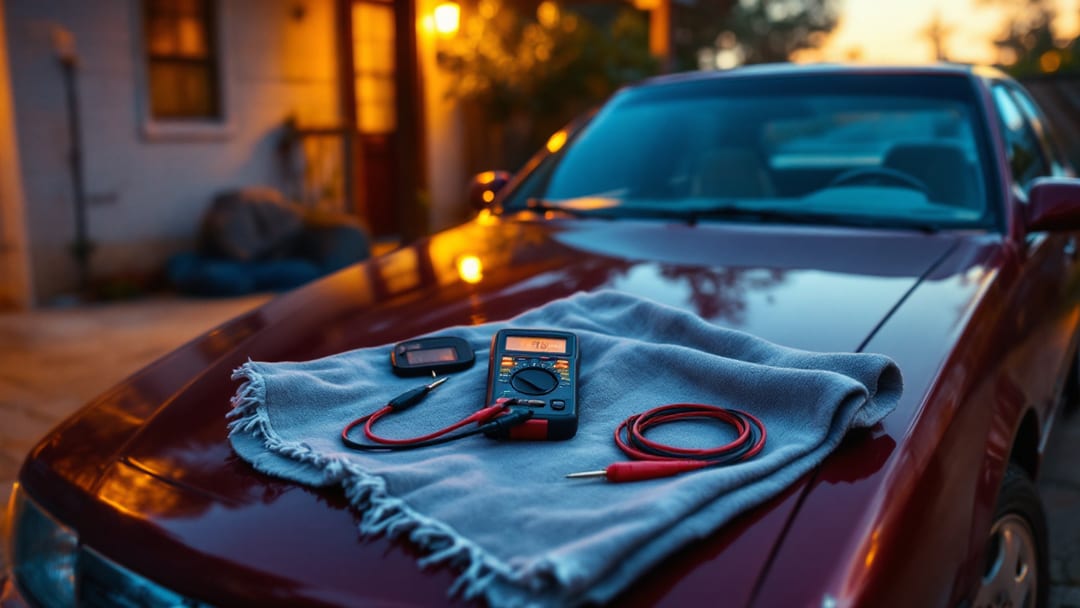
As of July 2026, older General Motors anti-theft no-start repairs in Arlington run roughly $140 to $380 on-site, and Arlington TX Locksmith diagnoses Passlock and VATS faults in your driveway before anyone buys parts — call or text (817) 330-5762. This is one of the most misdiagnosed conditions on the road. A car cranks strongly, never fires, and the owner is quoted a fuel pump. Meanwhile a security telltale has been sitting lit on the cluster the entire time, telling anyone who looks that the engine controller is withholding fuel on purpose. This guide explains both GM systems, how to tell which one your vehicle has, and what each fault actually costs to fix.
Two systems, thirty years of Arlington driveways
General Motors deployed two generations of anti-theft technology that still turn up constantly on older Chevrolet, Pontiac, Buick, Oldsmobile, Saturn, and GMC vehicles around Arlington. They behave differently and they fail differently.
VATS — the resistor key era. The earlier approach embedded a small resistor pellet into the key blade. A pair of contacts inside the ignition cylinder measured the resistance across that pellet and compared it to the expected value. Correct value, engine runs. Wrong value or no reading, no fuel. You can often spot a VATS key by eye: a small dark pellet set into the blade between the cuts.
Passlock — the sensor era. The later approach moved the check out of the key entirely. An electrical sensor in the ignition area generates a signal when the lock is turned, and the body and engine controllers verify that signal. The key itself carries no electronics on many Passlock vehicles, which surprises owners who assume every anti-theft key must have a chip.
Knowing which one you have determines everything downstream. A VATS problem is usually about the key, the contacts, or the wiring to them. A Passlock problem is usually about the sensor or its connector. Buying parts for the wrong one is the single most expensive mistake available here.
The symptom pattern that identifies it
Three observations together are essentially diagnostic, and you can make all three yourself.
The engine cranks strongly. The starter spins the motor at normal speed. Nothing sounds weak or slow. This immediately separates the condition from a battery, starter, or ground fault.
It never fires. Not a stumble, not a cough — nothing. Fuel is simply not being delivered.
The security telltale is illuminated or flashing. Depending on the vehicle this is a lamp reading SECURITY, a small car-and-padlock icon, or a THEFT SYSTEM message. It may light steadily during the attempt, flash afterward, or both.
When all three appear together, the anti-theft system is the place to look. It is worth saying plainly: a fuel pump can absolutely fail on a thirty-year-old car, and sometimes both things are true. But the security lamp is a deliberate message from the vehicle, and ignoring it in favor of an expensive guess is how people end up with a new fuel pump and the same no-start.
What the repairs cost in Arlington
| Older GM Anti-Theft Job | Typical Cause | Cost Range (Arlington) | Time On-Site |
|---|---|---|---|
| Correct VATS resistor key cut | Worn or wrong-value key | $140 – $230 | 30 – 60 min |
| Ignition cylinder contacts cleaned or repaired | Aged VATS contacts | $170 – $290 | 45 – 90 min |
| Passlock sensor diagnosis and repair | Failed sensor or connector | $210 – $380 | 60 – 120 min |
| Security relearn after repair | Module needs re-teaching | Add $60 – $130 | 30 – 45 min |
| Broken key extraction | Old brittle blade snapped | $95 – $190 | 20 – 45 min |
Those are realistic Arlington-area mobile ranges. A short call to (817) 330-5762 with your year, model, and a description of the security lamp behavior narrows it considerably before anyone drives out. For the same decision framed across newer platforms, our overview of ignition switch repair versus replacement covers the modern equivalents.
The thirty-minute relearn — what it does and does not fix
Many Passlock-equipped GM vehicles have a documented relearn procedure involving cycling the ignition through timed intervals — commonly described as roughly ten minutes at a time, three times, watching the security lamp for a change in behavior. Your owner's manual or factory service information for the specific model year gives the exact sequence.
It is worth knowing what this procedure genuinely accomplishes.
It does fix a module that has lost its stored security value after a battery disconnect, a jump start gone sideways, or a transient glitch. These cases are real and reasonably common, and the relearn costs nothing but patience.
It does not fix a failed sensor, a broken wire, corroded contacts, or a key with the wrong resistance value. No amount of ignition cycling repairs hardware. Owners sometimes run the procedure four or five times, conclude the car is beyond help, and call a tow truck — when the actual fault was a two-dollar connector that had backed out of its housing.
The sensible order is: identify which system the vehicle uses, verify the fault is not mechanical or key-related, attempt the relearn if the symptoms fit, and diagnose properly if it does not resolve. That sequence costs the least in both money and weekends.
Vehicle owners can check whether any open safety recall applies to their specific vehicle by entering the VIN into the federal recall lookup tool, which returns recalls that have not yet been repaired. — NHTSA
General Motors has issued ignition-related safety recalls across a range of platforms over the years, and a VIN lookup at NHTSA tells you in under a minute whether open work exists on your specific vehicle. Manufacturers perform recall repairs at no charge. That check belongs before any paid diagnosis on an older GM.
Why VATS keys are simpler than they look
Owners often assume a resistor key is a dead end without the original. It is not.
The VATS system used a limited, finite set of resistance values. A technician with a meter can determine the correct value for your vehicle by measurement rather than by trying pellets at random, then cut the blade to your vehicle's specification and install the matching pellet. The whole job is closer to traditional key cutting than to modern electronic programming.
Two practical notes. First, the contacts inside the cylinder that read the pellet are decades old on these cars, and they corrode. A key that reads intermittently is often a contact problem rather than a key problem, and cutting a second key will not resolve it. Second, the thin wires running from those contacts are a known wear point — they flex every time the tilt column moves, and after thirty years they break inside the insulation where nothing is visible. A wiggle test while watching the security lamp finds these faults quickly.
Passlock's failure mode
Passlock's sensor lives in the ignition lock housing area and generates its signal mechanically as the lock turns. Two things go wrong with age.
The sensor itself degrades and starts producing an out-of-range value. This is the classic Passlock failure and it typically arrives intermittently first — the car starts fine for weeks, then refuses once, then refuses more often.
The connector backs out or corrodes. Less glamorous, far cheaper, and genuinely common on vehicles that have had steering column or dash work done at some point in their lives.
Because both produce identical symptoms, and because one costs a fraction of the other, the diagnosis is where the value is. A technician who reaches for a sensor without checking the connector is guessing with your money. If your vehicle is a later GM product with a chipped key rather than a resistor key or a Passlock sensor, the relevant guide is our explainer on immobilizer, EEPROM and ECU programming, and for modern Chevrolet fobs see our post on Equinox and Malibu key fob replacement.
Is it worth fixing an older car?
This question deserves an honest answer rather than a sales answer.
For most of these vehicles, yes. A car that will not start has an effective value near zero until it does, and the repairs in the table above are measured in the low hundreds. Weighed against a tow plus a shop diagnosis plus the risk of a misdiagnosed fuel pump, on-site diagnosis and repair is usually the economical path by a wide margin.
The honest exception is a vehicle carrying several other major faults, where fixing the no-start returns you to a car that still needs a transmission. A technician worth calling will tell you that plainly, and you should be suspicious of one who never says it about any vehicle. If you are weighing the decision, current value estimates from Kelley Blue Book give you the other side of the arithmetic.
There is also a category where the answer is emphatically yes regardless of book value: an inherited car, a first vehicle for a teenager in the family, a project that has been in the garage for a decade. Book value is not the only kind.
Dealer, general shop, or mobile locksmith?
| Factor | GM Dealer | General Repair Shop | Mobile Locksmith |
|---|---|---|---|
| Vehicle must be transported | Yes — tow | Yes — tow | No — driveway service |
| Familiar with VATS resistor values | Sometimes | Rarely | Yes |
| Can cut and pellet a correct key on-site | No | No | Yes |
| Open safety recall work | Yes, no charge | No | Referred to dealer |
| Typical wait | Days | Days | Same day |
Older GM anti-theft work sits unusually squarely in locksmith territory because so much of it involves keys, cylinders, and the wiring immediately around them. General repair shops are excellent at engines and often unfamiliar with resistor values. Dealers have moved on from platforms this old. A locksmith who still services these vehicles has the meter, the pellets, and the pattern recognition.
If your immediate problem is a locked door on an older car with the keys inside, car lockout service is the relevant service, and a brittle old blade that snapped off calls for broken key extraction.
Vetting whoever you call
Texas regulates locksmith and private security work through the Texas Department of Public Safety Private Security Program, never TDLR. Ask for a price before the van rolls and ask what would change it.
The Federal Trade Commission has documented the low-quote-then-inflate pattern common in this trade, and the Texas DPS Private Security Program publishes the state's requirements. Our post on avoiding locksmith scams in Arlington has the full checklist.
Frequently Asked Questions
How much does a GM Passlock or VATS no-start repair cost in Arlington TX in 2026? Most older GM anti-theft repairs in Arlington run $140 to $380 on-site. Cutting a correct VATS resistor key sits at the low end, a Passlock sensor or connector repair sits in the middle, and cases requiring a security relearn plus a new key land toward the top. Diagnosis first keeps you from replacing a fuel pump you did not need.
What is the difference between VATS and Passlock? VATS is the earlier General Motors system that reads a small resistor pellet embedded in the key blade and checks its resistance value. Passlock replaced it with an electrical sensor at the ignition area that reports a signal rather than reading anything in the key. VATS faults are usually key or wiring related, while Passlock faults are usually sensor related.
My Chevy cranks but won't start and the security light is on. Is it the fuel pump? Almost certainly not. A strong crank with no start and an illuminated security telltale is the classic anti-theft signature. The engine controller is deliberately withholding fuel because it did not receive the expected security value. A fuel pump failure produces a no-start too, but it does not light the security lamp in that pattern.
What is the GM thirty-minute relearn and does it actually work? Many Passlock-equipped GM vehicles have a documented relearn that involves cycling the ignition through timed intervals until the security lamp behavior changes. It genuinely resolves some faults, particularly after a battery disconnect or a minor glitch. It does not fix a failed sensor or a broken wire, which is why a diagnosis before attempting it saves time.
Can a locksmith make a VATS resistor key without the original? Yes. There is a finite set of resistance values used across the VATS system, and a technician can determine the correct one for your vehicle by measurement rather than guesswork. The blade is then cut to your vehicle's specification and the correct pellet value installed, which is far faster than trying values at random.
Is this repair worth doing on a car worth a few thousand dollars? Usually yes, because the alternative is a vehicle that does not move. Most of these repairs land in the low hundreds while a tow plus a shop diagnosis plus parts on a misdiagnosis can easily exceed that. The honest exception is a vehicle with several other major faults, where a technician should tell you plainly rather than sell a repair.
Do these older GM systems ever fail while driving? The anti-theft systems generally prevent starting rather than shutting a running engine down, so the typical failure appears the next time you turn the key. That said, intermittent faults that let a car start sometimes and not others are common as connectors age, and an intermittent no-start is a strong signal to diagnose before you get stranded somewhere inconvenient.
Get an older GM starting again
If your Chevy, Pontiac, Buick, Saturn, or GMC cranks strongly and refuses to fire with a security lamp lit, the diagnosis is usually straightforward and the repair is usually affordable. Arlington TX Locksmith works on-site anywhere from East Arlington to South Arlington, the I-20 corridor, and out through Grand Prairie, Kennedale, and Mansfield.
Call or text (817) 330-5762 with your year, model, and what the security lamp is doing. You can also reach us through our contact page or read more about our mobile service.