Car Immobilizer & ECU Programming in Arlington TX (2026)
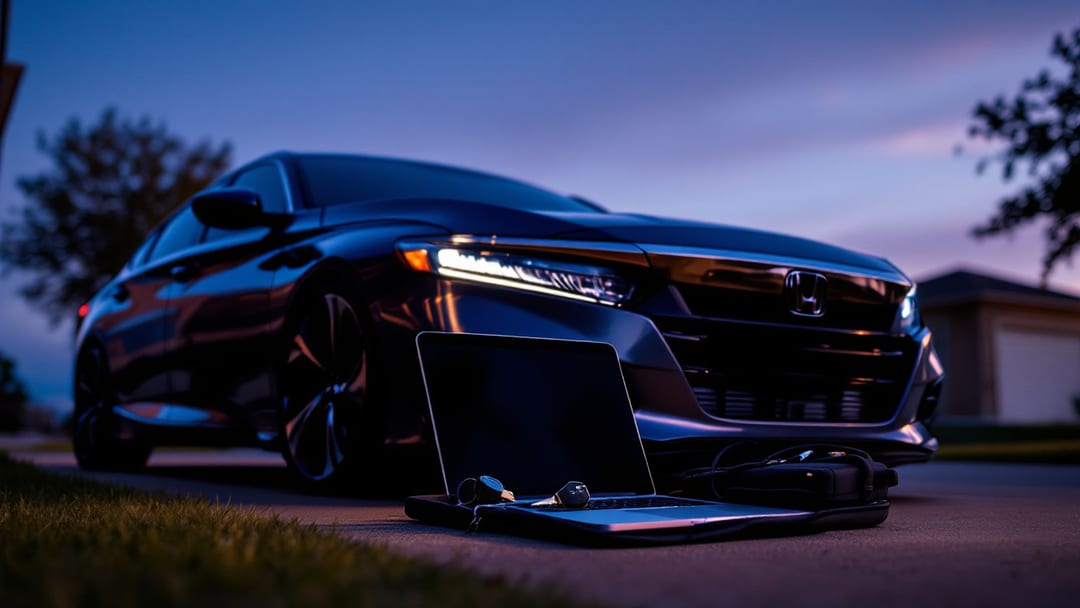
If every key to your car is gone and the dashboard immobilizer light keeps blinking, you are not looking at a simple key copy — you are looking at a computer problem. As of July 2026, Arlington TX Locksmith handles all-keys-lost immobilizer, EEPROM, and ECU/BCM relearn work as a mobile service, typically in the $180–$450 range for most mainstream vehicles (more for high-security push-to-start platforms). For a straight quote before anyone drives out, call or text (817) 330-5762. The rest of this guide explains what is actually happening inside the car, why it takes specialized gear, and how to decide between a mobile locksmith and the dealer.
What does a car immobilizer actually do?
Almost every vehicle built since the late 1990s has an engine immobilizer. It is the reason you can no longer start a modern car by jamming a screwdriver or a filed-down blank into the ignition. Buried in the key — or in the fob for push-to-start cars — is a tiny transponder chip. When you turn the key or press the start button, an antenna ring around the ignition or the start module reads that chip and asks the car's computer a simple question: does this code match what I have stored? If the answer is yes, the immobilizer releases and the engine is allowed to run. If it is no, the fuel and ignition stay locked out, and the engine cranks but never catches.
The National Highway Traffic Safety Administration credits electronic immobilizers as a major factor in the long decline of certain kinds of auto theft, because the mechanical part of the lock is no longer the whole story. That security is genuinely useful — right up until the moment you lose every key and become the person the system is designed to keep out. At that point the car cannot simply be re-keyed like a house deadbolt. The transponder data has to be recovered or rewritten, and that lives in the car's electronics, not in the metal cut of the blade.
This is the core reason automotive key work has drifted from a cutting job into a programming job. The blade still has to be cut correctly so it turns the mechanical ignition or opens the door, but the part that lets the engine actually start is a conversation between a chip and a computer.
Why can't you just program a new key with the old ones gone?
Most everyday programming — adding a spare when you still have a working key — happens through the OBD port under the dash and is quick. The car already trusts you because you handed it a valid key, so it is willing to enroll another. This is called on-board programming, and for a lot of vehicles it is genuinely a five-minute procedure.
All keys lost is a different animal. With no working key to prove you belong, the car will not simply accept a new one through the easy path. Depending on the make and year, one of several things has to happen:
- The locksmith's programmer reads a PIN or incode/outcode from the vehicle and uses it to authorize a new key.
- The immobilizer runs a security relearn that may include a mandatory wait time — some platforms force a 10-to-30-minute (or longer) delay as an anti-theft measure before they will enroll a fresh key.
- On tougher platforms, the on-board path is closed entirely, and the data has to be read directly from a memory chip.
That last case is where EEPROM work comes in, and it is the part most people have never heard of.
What is EEPROM reading, and when is it needed?
EEPROM stands for electrically erasable programmable read-only memory. In plain terms, it is a small chip inside a module — the immobilizer box, the body control module (BCM), or sometimes the engine control unit (ECU/PCM) — that stores settings and secret codes even when the battery is disconnected. The key-pairing data your car checks against often lives in one of these chips.
When on-board programming is not possible for an all-keys-lost car, a locksmith may need to access that EEPROM directly. Practically, that can mean carefully removing the relevant module, connecting to the memory chip on a bench with a specialized programmer, reading the stored data, and calculating the PIN or key code needed to generate a working key. In some cases the technician writes new data back so the module will accept a fresh key. It is delicate work: the Associated Locksmiths of America treats advanced automotive programming as a specialized discipline within the trade precisely because a mistake at the chip level can corrupt a module rather than fix it.
Not every job goes this deep. Many all-keys-lost calls are solved through the OBD port with the right programmer and a security relearn. EEPROM-level work is the fallback for platforms that lock the easy door — and it is one of the clearest reasons this is skilled labor rather than a hardware-store errand.
What is an ECU, BCM, or PCM relearn?
You will hear locksmiths and repair shops talk about a "relearn," and it is worth understanding because it shows up on the invoice. Modern cars distribute their brains across several modules. The ECU or PCM manages the engine. The BCM oversees body electronics — doors, lights, and frequently the immobilizer function. When a new key is introduced on an all-keys-lost car, one or more of these modules has to be taught to recognize it, and sometimes taught to recognize only it, so that any previously programmed keys are wiped from memory.
That wipe matters more than people expect. If you bought a used car and never received a second key, or if a key was lost to someone you no longer trust, a full relearn that erases all prior keys is a real security benefit — it is the automotive equivalent of an emergency rekey on your house after a break-in or a move. The U.S. Department of Energy has documented how thoroughly electronics now govern vehicle operation, and the immobilizer relearn is a direct example: the physical key is almost incidental compared with the software handshake behind it.
How much does immobilizer and all-keys-lost programming cost in Arlington?
Pricing depends almost entirely on how the specific platform handles security. A car that enrolls a key through the OBD port in ten minutes costs far less than one that forces a bench EEPROM read. These are realistic 2026 Dallas–Fort Worth ranges, all-in for the key plus programming on a mobile visit:
| Job type | What is involved | Typical Arlington range |
|---|---|---|
| Spare key, on-board (you still have a key) | Cut + quick OBD enroll | $90–$180 |
| All keys lost, standard transponder | Cut + PIN/relearn via OBD | $180–$320 |
| All keys lost, push-to-start smart key | Fob + proximity relearn | $260–$450 |
| EEPROM / module read (locked platform) | Bench read + key generation | $350–$600+ |
| High-security / European platform | Specialized tooling + time | Quote on inspection |
Two honest caveats. First, the newest model years often add security that delays third-party programming or restricts it to dealer software for a period after release; if your car is brand new, ask before assuming a locksmith can do it. Second, always get the number confirmed up front. The Federal Trade Commission's guidance on avoiding locksmith scams is worth following here — get the price on the phone, and be wary of a quote that sounds too cheap to be real, because a lowball figure often balloons on arrival.
A typical all-keys-lost call in Arlington
Imagine a driver near the I-20 corridor who parks at a shopping center off Matlock Road, drops the only key fob somewhere between the store and the car, and cannot find it. There is no spare at home. The car is a mainstream sedan, roughly seven years old, with a standard transponder key and a mechanical blade in the door.
A mobile technician arrives, confirms the vehicle identification number and ownership, and cuts a mechanical key to the door and ignition — sometimes by decoding the lock, sometimes by reading the key code. Then comes the electronic half: the programmer connects to the OBD port, pulls the security data, and runs an all-keys-lost relearn. On many cars there is a forced security wait before the new key enrolls, so the technician sets it running and waits it out. When the immobilizer light stops blinking and the engine starts, the job is done — a broken-key or lost-key situation resolved without a tow. If that same car had been a locked platform requiring EEPROM access, the visit would take longer and cost more, because a module would have to be read on the bench rather than through the port. Either way, the driver leaves with a working key, not a flatbed to a dealership in Kennedale.
Should you use a mobile locksmith or the dealer?
Both are legitimate. The right choice depends on the vehicle and the situation.
| Factor | Mobile locksmith | Dealership |
|---|---|---|
| Comes to you | Yes — driveway or lot | No — usually needs a tow |
| Price for common cars | Often lower | Often higher |
| Newest / rare platforms | Sometimes limited | Usually has factory tools |
| Speed for all-keys-lost | Same day, on site | Days if the car must be towed |
| EEPROM / module recovery | Yes, if equipped | Varies by dealer |
For the majority of vehicles on Arlington roads — trucks, mainstream sedans, and SUVs a few years old — a properly equipped mobile locksmith saves both money and the cost and hassle of towing an undrivable car. This is as true for import all-keys-lost jobs, covered in our guide to Toyota, Honda, and Nissan all keys lost in Arlington, as it is for domestic trucks like those in our Chevrolet Silverado and Tahoe key fob programming writeup. The dealer earns its keep on the newest model years, on certain European high-security platforms, and when a module genuinely needs manufacturer software that is not available to the aftermarket. The National Automotive Service Task Force exists partly to give qualified locksmiths legitimate access to the security information carmakers hold, which is one reason a trained mobile tech can handle far more platforms than most drivers assume. When you call, describe the year, make, and model and whether it is push-to-start; a straight shop will tell you honestly if your car is one of the few that has to go to the dealer.
"Anti-theft immobilizers have contributed to long-term reductions in vehicle theft by requiring an electronic key code before the engine will start."
What to have ready before you call
A few things make an all-keys-lost visit faster and cheaper. Have proof of ownership on hand — the registration or title and a matching photo ID — because a reputable locksmith will verify that the car is yours before making a key to it. Know the exact year, make, and model, and whether it uses a bladed key or push-to-start; that determines the tooling and the price — the distinction is spelled out in our breakdown of laser-cut vs transponder vs smart keys. If you have any old key, even a broken one, keep it, because a broken key extraction plus a copy is often cheaper than a full all-keys-lost job. And if the car is undrivable in a risky spot, a locksmith who also handles car lockouts can usually get you into the cabin first so nothing is left exposed. If you would rather not narrate the whole thing over the phone, you can reach us through the contact page or text the details.
Frequently Asked Questions
What is a car immobilizer and how does it work?
An immobilizer is an anti-theft system that stops the engine from starting unless it reads the correct transponder chip in your key. When you turn the key or press start, an antenna ring reads the chip, checks it against the car's stored codes, and only then lets the engine run.
What does EEPROM reading have to do with car keys?
EEPROM is a small memory chip inside a car's immobilizer, BCM, or ECU that stores the secret key codes. When on-board programming is blocked and all keys are lost, a locksmith may read the EEPROM directly to recover or write the data needed to make a working key.
Can a mobile locksmith program a key when all keys are lost?
Often yes. A properly equipped mobile locksmith in Arlington can generate a key from the vehicle, run an immobilizer or ECU relearn, and in harder cases read the EEPROM on a bench. Some newer or high-security models still require dealer-only tools or added security wait times.
How much does all-keys-lost immobilizer programming cost in Arlington?
For most mainstream vehicles, all-keys-lost programming in the Arlington area runs roughly $180 to $450 including the key, depending on the platform. High-security, push-to-start, or EEPROM-level jobs can run higher because they take more time and specialized equipment.
Is a mobile locksmith cheaper than the dealer for immobilizer work?
Usually. A mobile locksmith comes to you and often prices below a dealership for the same key and programming, with no tow required. The dealer can still be the right call for the newest platforms or when a module genuinely needs factory-level software.
Why does immobilizer programming need special tools?
The codes that pair a key to a car are encrypted and stored in protected memory. Reading, decoding, and writing them safely requires purpose-built programmers, current software, and the training to avoid corrupting a module — which is why this is skilled work, not a hardware-store copy.
Get your key made where the car sits
If you are stranded near the I-20 corridor, over toward Kennedale, or anywhere in the Arlington area with an immobilizer light that will not clear, you do not need a tow — you need the right programmer at the curb. Arlington TX Locksmith is a licensed and insured mobile service that handles all-keys-lost, EEPROM, and ECU/BCM relearn work on site. Call or text (817) 330-5762 for a straight quote, or reach out for a text estimate with your year, make, and model. Send the details by message and we will tell you the price and the ETA before anyone rolls out.