Laser-Cut vs Transponder vs Smart Keys: Arlington 2026
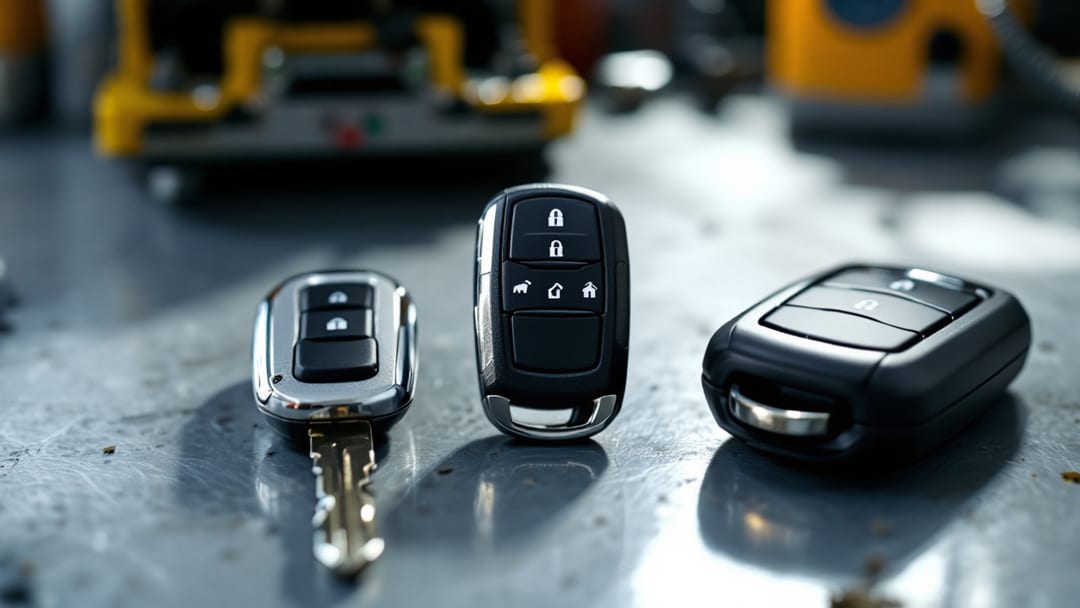
If you have priced a replacement car key lately and been shocked by how much it varies, the reason is that "car key" now covers three very different technologies. As of July 2026, Arlington TX Locksmith cuts and programs all three types — laser-cut, transponder, and smart keys — as a mobile service, generally $120–$280 for a transponder key and $200–$450 for a push-to-start smart fob, cutting and programming included. For a quote on your exact vehicle, call or text (817) 330-5762. This guide explains what actually separates the three, why one costs three times another, and how duplicating differs from replacing keys that are all gone.
What are the three main car key types?
Before comparing them, it helps to separate two things that get tangled together: how a key is cut and how a key talks to the car. The cut is mechanical — the shape of the metal blade that turns the lock. The communication is electronic — the chip or signal that convinces the immobilizer to let the engine start. A single modern key can be advanced on both fronts at once, which is why the labels overlap in conversation.
Here is the plain-English version of each:
- Edge-cut (traditional) key — the classic key with jagged teeth cut into the edge of the blade. Older and cheaper to copy. On cars from the 2000s onward it usually also carries a transponder chip.
- Laser-cut (sidewinder) key — a thicker blade with a smooth groove milled down the center of the key instead of teeth on the edge. More secure mechanically and requires a special machine to cut. Nearly always transponder-equipped as well.
- Smart key (proximity fob) — no blade to insert at all for normal use. You keep it in your pocket, the car senses it, and you push a button to start. It hides a small emergency blade inside for dead-battery situations.
Understanding these three, and the chip that rides along inside two of them, is enough to predict what your replacement will cost and why.
How does a transponder key work?
The word transponder is a blend of "transmitter" and "responder," and that is exactly what the chip does. Embedded in the plastic head of the key is a tiny chip with no battery of its own. When you insert the key and turn it, an antenna ring around the ignition energizes the chip, which responds with a unique code. The car's immobilizer checks that code, and only if it matches will the engine start. Edmunds describes this as the reason a hardware-store copy that fits the lock will still refuse to start the car — the blade is right, but the electronics never had the conversation.
Because the chip has to be paired to your specific vehicle, replacing or duplicating a transponder key is a two-part job: cut the blade to match the lock, then program the chip so the immobilizer accepts it. That programming step is what separates automotive key work from ordinary lock-and-key work, and it is why a transponder key costs more than the $3 brass copy you remember from decades ago. The National Highway Traffic Safety Administration links the spread of these systems to lower theft rates, since a thief can no longer start the car by defeating only the mechanical lock.
What makes laser-cut (sidewinder) keys different?
Laser-cut keys — often called sidewinder keys for the winding groove down the middle — are a mechanical upgrade over edge-cut blades. Instead of teeth filed into the edge, a computer-controlled cutter mills a precise track into the flat face of the blade. This makes the key harder to pick, harder to copy on a standard duplicator, and generally sturdier. Manufacturers moved many trucks, SUVs, and higher trims to sidewinder blades over the past decade — the full-size truck market especially, as our Ford F-150 key replacement cost guide details — and Kelley Blue Book notes that the shift toward more sophisticated keys and fobs has steadily raised the real cost of key replacement across the market.
The catch for you is the copy. A basic key-duplicating machine at a big-box store cannot reproduce a sidewinder groove; it takes a laser or milling machine built for the profile. So even when a laser-cut key has no chip at all, the cut alone costs more than an edge-cut copy. Add a transponder chip — which almost all of them have — and you are paying for a specialized cut and programming. That combination is the single most common reason drivers are surprised by the price when they go to replace a truck or SUV key in Arlington. It is not a markup; it is genuinely two skilled operations on one key.
How do smart keys and push-to-start fobs work?
Smart keys are the current top tier. A proximity fob broadcasts a low-power signal that the car detects when the fob is nearby. Walk up with it in your pocket and the doors may unlock; sit down, press the brake, and push the start button, and the car verifies the fob and fires the engine — no blade ever inserted. Inside almost every smart fob is a small mechanical emergency key that pops out, meant for unlocking a door when the fob battery dies or the car battery is flat.
Replacing a smart key is the most involved of the three. The fob itself is a more expensive piece of electronics, the hidden emergency blade still has to be cut to your lock, and the proximity system has to be programmed and paired to the car. On many platforms an all-keys-lost smart-key job also triggers a security relearn with a mandatory wait time — the kind of immobilizer and module work explained in our guide to car immobilizer and ECU programming in Arlington. All of that is why smart keys sit at the top of the price ladder — and why the number climbs further on European luxury platforms, where the security is tighter and the tooling more specialized. For a domestic example of push-to-start pricing, see our Dodge Charger and Ram 1500 smart key programming guide.
What do these key types cost in Arlington in 2026?
Here is how the three types stack up for a mobile replacement in the Arlington area, cutting and programming included, in realistic 2026 Dallas–Fort Worth ranges:
| Key type | How it is cut | Programming needed | Typical Arlington range |
|---|---|---|---|
| Edge-cut, no chip (older) | Standard duplicator | None | $15–$60 |
| Edge-cut transponder | Standard duplicator | Chip programming | $90–$200 |
| Laser-cut (sidewinder) transponder | Milling / laser machine | Chip programming | $150–$300 |
| Push-to-start smart fob | Emergency blade cut | Proximity relearn | $200–$450 |
| Luxury / European smart key | Specialized cutting | High-security relearn | Quote on inspection |
Two things move you within these ranges. The first is duplicating versus all keys lost, covered in the next section. The second is honesty about the quote. Follow the Federal Trade Commission's advice on avoiding locksmith scams: get the all-in figure over the phone, including cutting and programming, and be cautious about a price that sounds implausibly low — a $19 come-on for a smart key is a red flag, not a bargain.
Which cars use which key type?
There is no perfect chart, because manufacturers mix these across model years and trims, but some patterns hold. Older economy cars and base trims often still use edge-cut transponder keys. Full-size trucks, many SUVs, and mid-to-upper trims moved heavily to laser-cut sidewinder keys. Push-to-start smart keys started on luxury and premium models and have since spread down into mainstream sedans and crossovers, so a well-equipped commuter car today may well be keyless. The safest move is not to guess: give the year, make, model, and trim, and mention whether you insert a key or press a button to start. That one detail usually tells a locksmith exactly which technology — and which price band — you are in.
Duplicating a key vs replacing when all keys are lost
This is the distinction that surprises people most, and it applies to all three key types. Duplicating means you still have at least one working key. The car already trusts that key, so enrolling a spare is fast — often a quick procedure through the port under the dash — and the price stays low. All keys lost means there is no working key to prove ownership to the car. Now the locksmith has to generate a key from the vehicle itself and run a security relearn to make the immobilizer accept a brand-new key, sometimes waiting out a forced anti-theft delay. More tools, more time, more cost.
The practical lesson: make a spare before you need one. A duplicate cut while your only key still works is a fraction of the cost of an all-keys-lost job later, and it turns a future emergency into a non-event. If your only key has already snapped, a broken key extraction plus a copy may still beat starting from scratch — worth asking about before you assume the worst.
A typical Arlington replacement call
Imagine a shopper at The Parks Mall who comes out with an armful of bags and realizes the single smart fob for the family SUV is nowhere to be found — not in a pocket, not in a bag, not on the food-court table. There is no spare at home. The SUV uses a laser-cut emergency blade and a push-to-start proximity system.
A mobile technician meets the driver in the lot, confirms ownership, and pops the emergency blade to get into the cabin — the same skill behind a car lockout. Then the technician cuts a new emergency blade to the door lock, provisions a new smart fob, and runs the all-keys-lost proximity relearn, waiting out the security timer if the platform demands one. Twenty to forty minutes later the SUV recognizes the new fob, the doors respond to a walk-up, and the engine starts on the button. Had the family made a duplicate fob months earlier — say while running errands over in Pantego — the whole event would have been a ten-minute add-a-key instead of a full recovery. Same technology, very different afternoon.
"A transponder key contains a chip that must send the correct code to the vehicle before it will start, which is why a key that fits the lock will not necessarily start the car."
— Edmunds
How to get the right key the first time
Because the three types diverge so much in price and process, a little information up front saves money. Know whether you insert a blade or press a button. Check whether your current key is smooth-grooved (laser-cut) or edge-toothed. Have proof of ownership ready, since a legitimate locksmith verifies the car is yours before cutting a key to it. And if you are weighing a locksmith against the dealer, remember that for the vast majority of vehicles on Arlington roads a mobile locksmith cuts and programs all three key types on site, often below dealer pricing and without a tow. For the newest platforms or certain European luxury models, the dealer's factory tools can still be the right answer — a straight shop will tell you which camp your car is in when you get in touch.
Frequently Asked Questions
What is the difference between a laser-cut and a transponder key?
Laser-cut refers to how the metal blade is shaped — a smooth sidewinder groove milled down the center instead of edge teeth. Transponder refers to the electronic chip inside that starts the car. Many modern keys are both laser-cut and transponder-equipped at the same time.
Why do laser-cut keys cost more to duplicate?
Laser-cut, or sidewinder, keys need a specialized milling machine to reproduce the center-groove pattern, which standard key duplicators cannot cut. The extra equipment and time, on top of any chip programming, is why a laser-cut copy costs more than a basic edge-cut key.
What is a smart key and how is it different?
A smart key, or proximity fob, lets you unlock and push-to-start without inserting anything, using a short-range signal the car detects nearby. It usually hides a small emergency blade inside and must be programmed to the vehicle, making it the most expensive key type to replace.
How much does a transponder or smart key cost in Arlington?
In the Arlington area in 2026, a transponder key with cutting and programming typically runs about $120 to $280, while a push-to-start smart fob usually falls between $200 and $450. All-keys-lost jobs and luxury platforms sit at the higher end.
Is it cheaper to duplicate a key or replace all keys lost?
Duplicating is much cheaper because the car already trusts an existing key, so programming is quick and no security recovery is needed. All keys lost requires the locksmith to generate a key from scratch and run a security relearn, which takes more tools, time, and cost.
Can a mobile locksmith make all three key types in Arlington?
Yes. A properly equipped mobile locksmith can cut laser-cut and edge-cut blades, program transponder chips, and pair push-to-start smart fobs on site for most mainstream vehicles, coming to you rather than requiring a tow to a dealership.
Get the right key made at the curb
Whether your car takes a laser-cut blade, a transponder key, or a push-to-start smart fob, Arlington TX Locksmith cuts and programs it on site — from The Parks Mall parking lot to a driveway in Pantego. We are a licensed and insured mobile service, and we will quote the exact all-in price before we roll out. Call or text (817) 330-5762 with your year, make, model, and trim, and whether you press a button to start. Send it by message and we will tell you the key type, the price, and the ETA. The visible number is (817) 330-5762 — text for a quote anytime.