Does My Car Need a Transponder Key? Arlington TX Guide
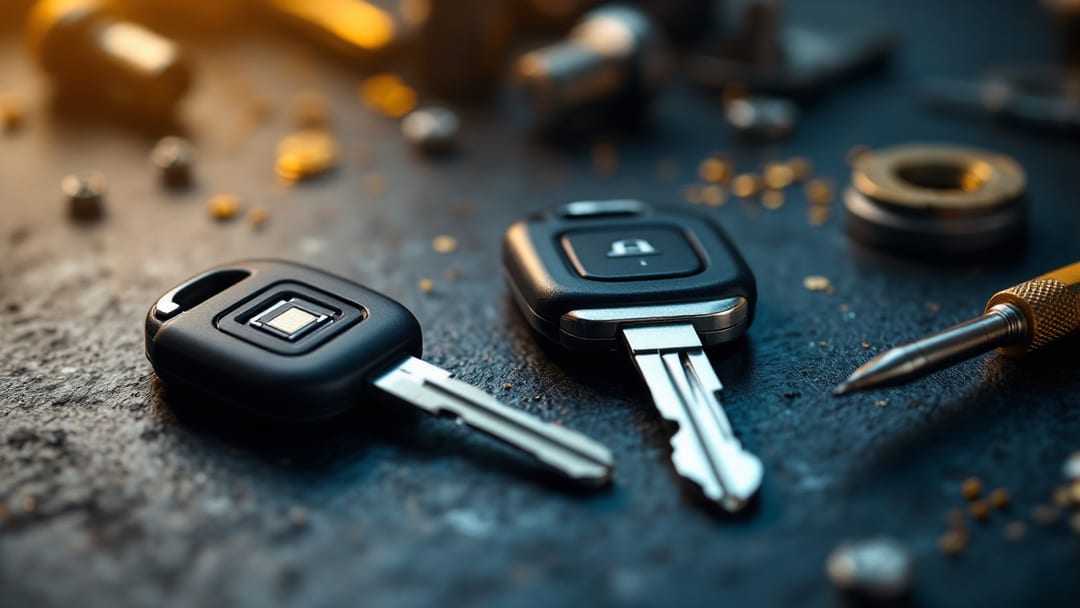
Almost certainly yes, if your vehicle is a 1998 or newer model. As of July 2026, virtually every passenger vehicle on Arlington roads uses a transponder key or a proximity fob, and a transponder blade key cut and programmed here runs roughly $140 to $240 with a working original in hand — call or text (817) 330-5762 for your vehicle's exact figure. Most people discover this the expensive way: they pay a few dollars for a hardware-store duplicate, it turns the ignition perfectly, and the engine cranks and refuses to fire. This guide shows you how to check in about sixty seconds, explains why the copy failed, and gives real Arlington pricing for doing it properly.
The sixty-second check
Three tests, in order of speed.
Look at the head of the key. A key with a thick molded plastic head is very likely carrying a chip inside that plastic. A completely flat all-metal key with no plastic at all is likely not. This is not definitive — some plastic-headed keys are chipless and a few chips hide in slim housings — but it is right far more often than not.
Recall what happened with a copy. If you have ever had a key cut at a hardware store, a big-box store, or a kiosk, and it opened the doors and turned the ignition but the engine would not start, you have your answer. That is the exact signature of an immobilizer refusing an unrecognized credential.
Check the model year. Manufacturers rolled immobilizers into standard equipment through the late 1990s and into the early 2000s, driven by anti-theft pressure and insurance requirements. By the mid-2000s, going without one was rare. A 1996 pickup may well be chipless. A 2006 sedan almost certainly is not.
The only definitive test is a scan with a dedicated transponder reader, which takes a technician a few seconds. If you are already talking to a locksmith about a spare, ask — it costs nothing and settles the question.
Why the hardware-store copy failed
This is worth understanding because it explains the entire price difference between a five-dollar copy and a properly made key.
A key does two independent jobs on a modern vehicle.
The mechanical job. The blade's cut pattern aligns wafers or pins inside the lock cylinder so it can turn. A copying machine reproduces this perfectly well, and that is why the copy turns your ignition.
The electronic job. A transponder chip embedded in the key head answers a radio challenge from an antenna ring encircling the ignition cylinder. It is a passive device with no battery — the ring energizes it inductively at very short range. The vehicle's immobilizer compares the response against its stored list. Correct response, the engine controller allows fuel. Wrong or missing response, no fuel.
A copying machine cuts metal. It does not write credentials. So the copy passes the mechanical test and fails the electronic one, which produces exactly the symptom people describe: it turns, the starter spins, and nothing happens.
Nothing is broken in that scenario. The security system is working precisely as designed.
Engine immobilizers are among the vehicle anti-theft technologies credited with reducing theft, because a vehicle will not start unless the correct electronic key is present. — NHTSA
The National Highway Traffic Safety Administration has tracked the effectiveness of these systems for years, and research from organizations including the Insurance Institute for Highway Safety has examined how theft patterns shifted as immobilizers spread. The technology worked. The side effect is that a replacement key now involves programming, which is why it costs what it does.
Transponder key costs in Arlington
| Key Type | What It Involves | Cost Range (Arlington) | All Keys Lost |
|---|---|---|---|
| Plain mechanical key, no chip | Cut only | $30 – $80 | Add $40 – $90 |
| Transponder blade key | Cut + chip programmed | $140 – $240 | Add $75 – $150 |
| Transponder key + separate remote | Cut + chip + remote paired | $170 – $270 | Add $80 – $160 |
| Proximity smart key, push-to-start | Fob + emergency blade + registration | $220 – $400 | Add $90 – $180 |
The jump between the first and second rows is the entire subject of this article. Cutting metal is inexpensive; teaching a security module to trust a new credential requires current software, the correct blank, and a technician who knows the platform.
A short call to (817) 330-5762 with your year, make, and model tells you which row you are in before you spend anything. For the full picture across makes, our overview of car key replacement cost in Arlington breaks the numbers down further, and our comparison of laser-cut versus transponder keys explains how the blade shape itself also moves the price.
Transponder key, key fob, smart key — the terms untangled
These get used interchangeably and they are not the same thing.
Transponder key. A mechanical blade with a passive chip in the head. No battery. Works only at very short range, read by an antenna at the ignition. Its whole job is to let the engine start.
Remote / key fob. A battery-powered radio transmitter for locking, unlocking, panic, and sometimes trunk or sliding doors. Works at a distance. On many vehicles this is a separate device from the chipped blade, and it can fail independently — a dead remote with a healthy transponder means the car still starts but the buttons do nothing.
Proximity smart key. Combines both functions plus passive detection, so the vehicle senses the key inside the cabin and a button starts the engine. There is no cylinder to turn. These hide an emergency blade inside the fob for the driver's door, which still has to be cut to the vehicle's specification.
Knowing which one you have determines what a failure means. If your doors stop responding but the car still starts, that is a remote or battery problem. If the car will not start but the doors work, that is a transponder or immobilizer problem. Our guide to telling a dead fob battery from a genuinely dead fob covers the first case, which is by far the cheaper of the two.
Can you program one yourself?
Sometimes, on older vehicles, with a specific precondition.
A number of vehicles from roughly the late 1990s through the 2000s support an owner-performed procedure that requires two already-working keys. The sequence typically involves inserting and turning each in a documented pattern, then introducing the new key within a timing window. Your owner's manual documents whether your vehicle supports it.
Two hard limits apply. It does not work when all keys are lost, because the procedure needs existing trusted credentials to authorize the new one. And it does not work on most vehicles from roughly the last fifteen years, where registration requires connecting equipment to the diagnostic port.
The practical implication is the same advice that runs through every article on this site: make the spare while you still have a working key. A second key added today is short work at the low end of the price table. The same key made after the last original disappears requires originating a blade from the vehicle's data and running a full security session, and it costs meaningfully more.
Vehicles that genuinely do not need one
They still exist around Arlington, and if you own one, this whole subject is inexpensive for you.
Most pre-1998 vehicles use a purely mechanical key. So do a scattering of early base-model economy cars and various work and fleet vehicles from that era where an immobilizer was optional equipment nobody ordered. Some trailers, equipment, and older powersports vehicles are also chipless.
For these, a key cut is just a key cut — thirty to eighty dollars and a few minutes. The catch is that owners of older vehicles are the most likely to be quoted transponder pricing by an operation that never checked. Asking directly whether your key actually has a chip is a fair question, and a good shop will scan it rather than assume.
If you are running an older vehicle, the more likely key-related problem is a worn cylinder rather than a chip. Our guide to ignition switch repair versus replacement covers that path, and for older General Motors products specifically, our post on Passlock and VATS resistor-key no-starts covers a related and frequently misdiagnosed condition.
What to ask before you buy a key anywhere
Four questions save most of the money that gets wasted on this.
"Does my vehicle use a transponder key?" A shop that answers without knowing your year, make, and model is guessing.
"Is the chip programming included in that price?" The most common bad-faith quote in this trade separates cutting from programming, quotes only the cutting, and reveals the programming charge after the work has begun.
"Will the blank you're bringing match my vehicle's part number?" This matters more on remotes and smart keys than on plain transponder blades, but it is always worth asking.
"What happens if it doesn't program?" A fair shop tells you the answer before it arrives. Some vehicles genuinely require the dealer, and knowing that in advance is far better than discovering it in your driveway.
The Federal Trade Commission has documented the classic locksmith bait-and-switch: a low phone quote, an on-site reclassification of the job as "high security," and an inflated final bill. Texas regulates locksmith and private security work through the Texas Department of Public Safety Private Security Program — never TDLR, whatever a listing may claim. The Texas DPS Private Security Program publishes the state's requirements, and our post on avoiding locksmith scams in Arlington has the complete checklist.
Frequently Asked Questions
Does my car need a transponder key? If your vehicle is a 1998 or newer model year, it almost certainly does. Federal anti-theft pressure and insurance requirements pushed manufacturers to make immobilizers standard equipment through the late 1990s and early 2000s. A handful of base-model and fleet vehicles from the early part of that window shipped without one, but they are the exception.
How much does a transponder key cost in Arlington TX in 2026? A transponder blade key cut and programmed in Arlington typically runs $140 to $240 when you still have a working original. All-keys-lost work adds roughly $75 to $150 because the blade must be originated from the vehicle's data and a full security session run rather than a quick addition.
How can I tell if my key has a chip in it? Three quick checks. A thick plastic head rather than an all-metal key strongly suggests a chip. A hardware-store copy that turns the ignition but will not start the engine confirms one. And a locksmith can scan the key in seconds with a dedicated reader, which is the only method that gives a definitive answer.
Why did my hardware store key copy fail to start the car? Because a key copy reproduces only the mechanical cuts, not the electronic credential. The blade turns the cylinder correctly, but the immobilizer never receives a valid transponder response, so the engine controller withholds fuel. The car cranks and does not fire. Nothing is broken — the security system is doing its job.
Can a transponder key be programmed at home? A small number of older vehicles support an owner-performed procedure that requires two already-working keys, which is documented in the owner's manual. It does not work when all keys are lost or when only one key exists, and most vehicles from the last fifteen years require diagnostic equipment regardless.
Is a transponder key the same as a key fob? Not quite. A transponder key is a mechanical blade with a chip embedded in the head that the ignition reads at very short range. A key fob adds a battery-powered radio for remote locking and, on push-button vehicles, proximity detection. Many keys are both, and some vehicles use a chipped blade with a completely separate remote.
Do older cars without transponders still exist in Arlington? Yes, though they are increasingly uncommon on the road. Most pre-1998 vehicles, some early base-model economy cars, and various work and fleet vehicles from that era use a purely mechanical key. For those, a straightforward key cut is all that is required, which makes them dramatically cheaper to duplicate.
Find out what your key actually is
Tell us your year, make, and model and we will tell you in one message whether your vehicle needs a chipped key, what it costs, and whether a spare can be made in your driveway today. Arlington TX Locksmith works throughout North Arlington, South Arlington, the UTA area, Lake Arlington, and out through Grand Prairie, Mansfield, Kennedale, and Pantego.
Call or text (817) 330-5762 for a straight answer and a firm price. You can also reach us through our contact page or read more about our mobile service.