Sliding Patio Door Lock Security for Arlington TX Homes
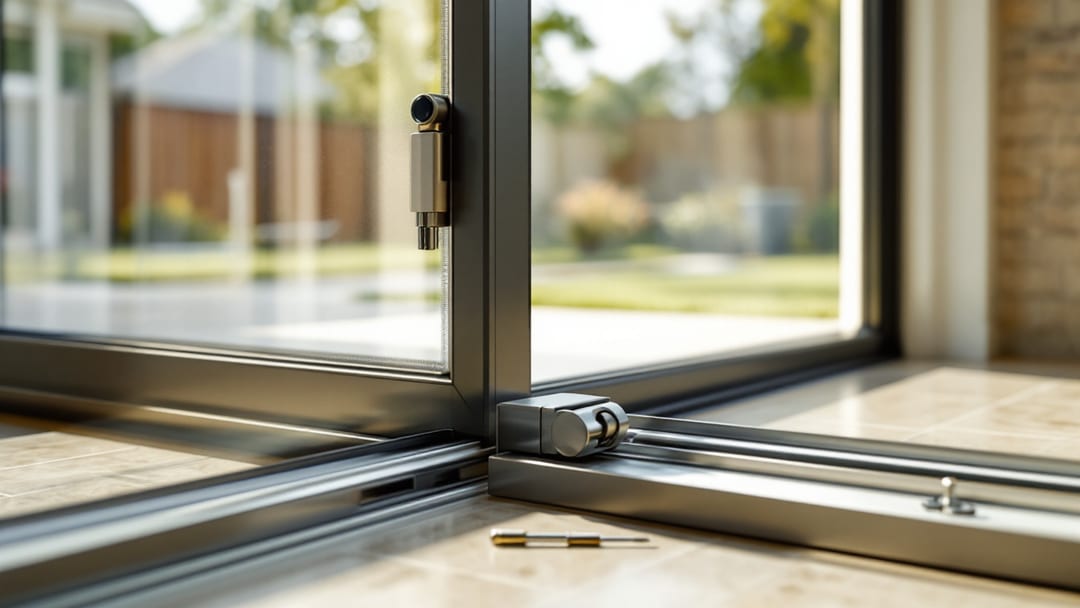
As of July 2026, the weakest lock in most Arlington homes is the one on the back patio — the factory sliding-glass-door latch is a convenience hook, not a real lock, and it is exactly where a lot of break-ins happen. The good news is that it is cheap to fix: a security bar or track pin lock costs $15–$60 in do-it-yourself parts, and a professional auxiliary or keyed lock install runs about $80–$200. Arlington TX Locksmith secures sliding doors for homes across Arlington and Mansfield, and this guide walks through every layer worth adding. For hardware advice or an install, call or text (817) 330-5762.
Why are factory sliding door latches so weak?
Slide open almost any patio door and look at the mechanism: a single spring-loaded hook that catches a thin metal strike in the frame. That is the entire lock. It was engineered so a family member can flip it with one finger — which means it also gives way to very little force from outside.
Three weaknesses stack up:
The latch itself is flimsy. A narrow hook and a thin strike can be jostled, shimmied, or pried loose. Many can be defeated by rattling the door hard enough to bounce the latch out of its catch — no tools required.
The door can be lifted out of its track. Sliding doors hang on rollers and ride in a track with clearance above them so they glide. If that clearance is generous and nothing blocks it, the whole panel — latch engaged or not — can be lifted up and out of the bottom track, then set aside. The lock never had to fail; the door simply came out.
The glass and frame invite leverage. A large aluminum-framed panel gives a pry bar plenty to work against, and the factory latch offers little to resist it.
None of this means a patio door is a lost cause — it means the factory latch was never the finish line. Consumer Reports has long noted that sliding glass doors are a common vulnerable entry point and benefit from secondary locks and reinforcement beyond the builder's latch. Layering a few inexpensive measures turns the weakest door in the house into a genuinely hard one.
What are the best ways to secure a sliding patio door?
Sliding-door security works in layers, each closing a different weakness. Here is the toolkit, roughly from cheapest to most robust.
| Upgrade | Typical cost | Stops | DIY or pro |
|---|---|---|---|
| Security bar in track | $15–$40 parts | Sliding the door open | DIY |
| Track pin / dowel lock | $15–$30 parts | Sliding the door open | DIY |
| Anti-lift pins or screws | $10–$40 parts | Lifting door off track | DIY or pro |
| Auxiliary foot bolt | $20–$50 parts, or install | Sliding, adds a second point | DIY or pro |
| Keyed auxiliary lock | $80–$200 installed | Sliding, adds keyed point | Pro |
| Roller / track adjustment | Quoted on site | Restores latch, closes lift gap | Pro |
Security bar. A rigid bar wedged in the lower track physically blocks the door from sliding. Cheap, instant, and effective against the most common attack — but useless against lifting, so pair it with anti-lift.
Track pin lock. A pin or dowel drops through a hole drilled in the frame so the door cannot slide. Similar effect to a bar, tidy and low-profile.
Anti-lift pins or screws. The single most-overlooked fix. Screws or pins set into the upper track close the gap above the door so it cannot be raised out. This is what makes a security bar honest — bar plus anti-lift covers both slide and lift.
Auxiliary foot bolt. A bolt near the bottom (or top) of the door drops into the track or frame, adding a strong secondary locking point separate from the flimsy factory latch. A foot bolt you operate with your toe is convenient and sturdy.
Keyed auxiliary lock. The strongest secondary point — a keyed lock added above the factory latch. Best for a ground-floor door onto a private backyard or an alley, where you want key control and maximum resistance.
How much does sliding door security cost in Arlington?
The spread is wide because the fixes range from a $20 bar to a professionally installed keyed lock, and most homes end up with a combination rather than a single item.
For a do-it-yourself layered setup — a track bar, a set of anti-lift screws, and a pin lock — you are typically looking at $40–$90 in parts and an afternoon. That combination alone dramatically outperforms the factory latch and covers both sliding and lifting.
For a professional install of an auxiliary foot bolt or a keyed secondary lock, plan on roughly $80–$200 depending on the hardware and whether the door needs adjustment. The pro route is worth it when you want a keyed lock you cannot fit yourself, when anti-lift protection needs doing right, or when the door has drifted and the factory latch no longer catches — a common issue on older Arlington homes where the frame has settled and the rollers have worn. If the latch is sticking or the door drags, that is a repair conversation, and our lock repair service covers sliding-door hardware alongside standard locks.
The U.S. Department of Energy points out that sliding patio doors are also a frequent source of air leaks and drafts, and that weatherstripping and proper adjustment improve both efficiency and how well the door seals and latches — so a door that is tuned to close tightly is both more secure and more efficient. Tightening up a loose, drafty slider often improves security as a side effect.
How do I stop the door from being lifted off its track?
This deserves its own section because it is the weakness homeowners most often miss. You can bar the track and pin the door and still be vulnerable if someone can simply lift the panel up and out.
The fixes are quick and cheap:
- Anti-lift pins or screws in the upper track. Drive several screws partway into the top track (or install dedicated anti-lift pins) so their heads reduce the clearance above the door. Now there is no room to raise the panel out. Leave enough gap for the door to still roll, but not enough to lift free.
- Adjust the rollers. Sliding doors have adjustable rollers that set how high the panel rides. Worn or misadjusted rollers leave too much top clearance; setting them correctly lowers the door so it sits snug in the track. A locksmith or handy owner can do this with the adjustment screws at the door's base.
- Add a head-track filler. A strip or spacer in the upper channel accomplishes the same as anti-lift screws by physically occupying the lift gap.
Pair any anti-lift measure with a track bar or pin lock and you have closed both attack paths — slide and lift — for very little money. That two-part combination is the real baseline for a secure patio door.
A typical Arlington scenario: the backyard slider near Lake Arlington
Picture a homeowner in a subdivision near Lake Arlington whose family room opens through a sliding glass door onto a fenced backyard that backs to a greenbelt. The door has the original builder's latch and nothing else. One evening they notice the latch does not always catch on the first try — the door has settled over the years and the rollers are worn, so the panel rides a little high and a little loose. It still "locks," but a firm rattle pops the latch, and there is a visible gap above the panel.
This is the exact profile a locksmith secures constantly. The fix is layered and inexpensive. First, the rollers get adjusted so the door sits properly and the factory latch catches cleanly again. Second, anti-lift screws go into the upper track to kill the lift gap. Third, a foot-bolt auxiliary lock is added near the base as a strong secondary point independent of the factory latch, and a security bar goes in the track for a fourth layer at night. The greenbelt-facing door went from the home's weakest point to one a would-be intruder would skip — for a modest parts-and-labor total, no new door required.
The same pattern fits countless homes across Mansfield and south Arlington where sliders open onto private yards and greenbelts.
When should I upgrade to a keyed sliding door lock?
Bars, pins, and foot bolts are excellent, but there are cases where a keyed auxiliary lock is the right call:
- Ground-floor doors onto private or concealed areas — a fenced backyard, an alley, or a greenbelt — where the door is out of public view and worth extra resistance.
- You want key control, so the secondary lock can only be operated with a key from outside, not shimmied or bumped loose.
- Rental or shared situations where you want a lock you manage rather than only an interior bar anyone inside can move.
- After a scare or break-in, when you are resetting your home's security overall and want the patio door brought up to the same standard as the front. The same-day reset playbook is in emergency rekey after a break-in or lost keys.
"Secure sliding glass doors with a bar or dowel in the track and hardware that prevents the door from being lifted out — these doors are a common weak point and deserve a secondary locking device beyond the factory latch."
— Home-security guidance consistent with Consumer Reports
If you are upgrading the patio door as part of a wider security refresh, it pairs naturally with getting your entry deadbolts up to grade — the framework for that is in ANSI deadbolt grades and smart lock installation, and before hiring anyone it is worth confirming standing through the Better Business Bureau and getting a written all-in price. We serve homes from south Arlington out toward Lake Arlington and beyond, and you can reach us anytime through the contact page.
Frequently Asked Questions
Why are sliding patio door locks so weak? Most sliding doors ship with a single spring-loaded latch hook that engages a thin strike, and that latch can be jostled loose, forced, or bypassed far more easily than a real deadbolt. The door itself can also be lifted out of its track if it was not installed with anti-lift measures. The factory latch was designed for convenience, not to resist a determined break-in.
What is the cheapest way to secure a sliding glass door in Arlington? A security bar or a track pin lock is the cheapest effective upgrade, with parts typically running $15 to $60 and simple do-it-yourself installation. A bar wedges in the lower track to stop the door from sliding, and a pin lock drops a pin through both door frames. Neither replaces a good auxiliary lock, but both add real, immediate resistance for very little money.
Do sliding door security bars actually work? A quality security bar meaningfully raises the effort needed to force a sliding door open, because it physically blocks the door from sliding in its track. It is not a complete solution on its own, since it does nothing against lifting the door off the track, but combined with an anti-lift measure and a secondary lock it is a genuinely useful layer for an Arlington home.
How do I stop someone from lifting my sliding door off its track? Anti-lift measures close the gap above the door so it cannot be raised out of its track. The common fixes are installing anti-lift pins or screws through the upper track, or adjusting the door rollers so the door sits with minimal clearance above. A locksmith can add these quickly, and they matter because a security bar alone does nothing against a door that lifts out.
How much does professional sliding door lock installation cost in Arlington? Professional installation of an auxiliary sliding-door lock, such as a foot bolt or a keyed secondary lock, typically runs about $80 to $200 depending on the hardware and the door. Do-it-yourself bars and pin locks cost far less in parts. A locksmith is worth it when you want a keyed lock, anti-lift protection, or a door that no longer latches correctly fixed at the same time.
Can a locksmith add a keyed lock to a sliding glass door? Yes. A locksmith can install a keyed auxiliary lock or a foot-bolt lock on most sliding patio doors, giving you a far stronger secondary point than the factory latch. This is a smart upgrade for a ground-floor door that opens to a private backyard or an alley, and it is often paired with anti-lift pins and a track bar for full coverage.
Turn your weakest door into a hard one
A sliding patio door does not need to be your home's soft spot. A few layered measures — anti-lift protection, a track bar or pin, and a sturdy auxiliary or keyed lock — close both the slide and the lift attacks for a fraction of the cost of a new door. Arlington TX Locksmith is a mobile, licensed and insured locksmith serving homes across Arlington, Mansfield, Grand Prairie, and the surrounding cities. We will assess your patio door, recommend the right combination for how it is used, and install it so it is secure and still easy for your family to open. Call or text (817) 330-5762 or text a photo of your sliding door for a fast quote at (817) 330-5762. Reach us anytime through the contact page.