ANSI Deadbolt Grades & Smart Lock Installation in Arlington TX
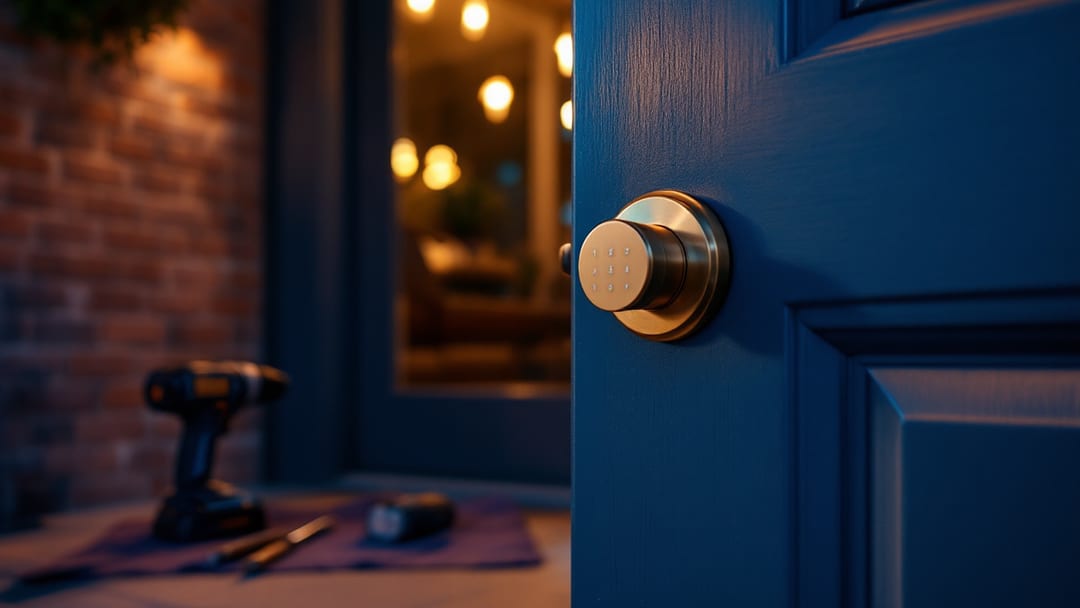
As of July 2026, the single number that tells you the most about a deadbolt is its ANSI/BHMA grade — and most Arlington front doors are wearing a weaker one than their owners realize. Arlington TX Locksmith installs and upgrades residential deadbolts and smart locks across the area, and here is the short version: for an exterior door you want a Grade 1 or strong Grade 2 deadbolt, quality hardware runs $120–$300 with professional installation adding roughly $80–$180, and the door and frame matter as much as the lock. If you are weighing a security upgrade for a home in West Arlington or Mansfield, call or text (817) 330-5762 for straight advice and a clear quote before you buy anything.
What do ANSI/BHMA deadbolt grades actually mean?
Every quality deadbolt sold in the United States can be tested against a standard set by ANSI (the American National Standards Institute) and BHMA (the Builders Hardware Manufacturers Association). The result is a grade — 1, 2, or 3 — printed on the box. It is not marketing; it reflects how the lock performed in defined tests for strength, operational cycling, and bolt performance.
Here is how the three grades break down for a homeowner:
| Grade | Tested for | Real-world meaning | Best use |
|---|---|---|---|
| Grade 1 | Highest cycle counts and force resistance | Commercial-level strength; best against kicking, prying, wear | Front and back exterior doors |
| Grade 2 | Solid intermediate performance | Strong residential protection | Exterior doors, good value tier |
| Grade 3 | Basic minimum residential standard | Builder-grade; limited force resistance | Low-risk interior or secondary doors |
The important takeaways: Grade 1 is the strongest, and Grade 3 is the weakest — the opposite of a school report card, which trips people up. A Grade 1 deadbolt endures far more operating cycles before it wears out and resists more force before the bolt or housing gives way. A Grade 3, the level a lot of tract homes ship with, meets a minimum and not much more.
Consumer Reports has long advised choosing deadbolts by their ANSI/BHMA grade rather than by looks or brand alone, and steering exterior doors toward the higher grades. The Associated Locksmiths of America similarly points homeowners to graded, professionally installed hardware over the cheapest option on the shelf. When you shop, look for the grade stamped on the packaging — if it is not listed, that itself tells you something.
How do deadbolt grades relate to bumping, picking, and kicking?
Grades measure durability and force resistance, but three attack methods worry homeowners most, and they are worth separating because a grade does not cover all of them equally.
Kicking and prying are brute-force attacks, and this is where grade matters most directly. A Grade 1 deadbolt with a full one-inch bolt throw, seated in a reinforced strike, resists a kick far better than a builder-grade lock in a short-screwed strike plate. Most residential break-ins are fast and physical, not delicate, so kick resistance is the practical priority for a front door.
Bumping uses a specially cut key tapped to jolt the pins. Picking manipulates the pins individually. Resistance to these depends on the cylinder's internal design — security pins, tighter tolerances, restricted keyways — more than on the bolt's grade. A good deadbolt pairs a high mechanical grade with a cylinder that includes anti-bump and anti-pick features. When you are choosing hardware, ask specifically about bump and pick resistance rather than assuming the grade covers it, because a lock can be Grade 1 for strength yet ordinary at the cylinder.
The Federal Trade Commission's guidance on hiring locksmiths reinforces a related point: the person installing and advising on your hardware should be able to explain these trade-offs plainly and give you a written price, not push a single expensive product with vague claims. If a lock is worn, sticking, or already damaged, that may be a repair conversation rather than a replacement — our lock repair service handles the in-between cases.
How do I choose a smart lock for an Arlington home?
A smart lock is a deadbolt with electronics bolted on — and that framing is the key to choosing well. The electronics give you keypad codes, phone control, and access logs; the mechanical lock underneath still needs a real ANSI/BHMA grade, because a burglar kicking your door does not care about the app.
Work through these decisions in order:
- Mechanical grade first. Pick a smart deadbolt whose physical lock is Grade 1 or Grade 2. Convenience features are worthless on a bolt that fails to a shoulder.
- Retrofit vs. full replacement. Retrofit models keep your existing exterior cylinder and deadbolt, swapping only the interior thumb-turn for a motorized unit — so your old keys still work and installation is simpler. Full smart deadbolts replace the entire lock and add a keypad on the outside. Retrofit is cheaper and faster; full replacement gives you keyless entry and code control.
- Power and connectivity. Check battery life and how the lock warns you before it dies, and confirm it connects the way you want — Wi-Fi, Bluetooth, or a hub. The U.S. Department of Energy notes that connected home devices trade a small amount of standby power for convenience and control; a smart lock's draw is minor, but a dead battery is an avoidable lockout, so pick one with clear low-battery alerts.
- Backup entry. The best smart locks keep a physical key override or external battery terminals so a flat battery never strands you outside. Prioritize that.
For a family that hands out access to kids, dog walkers, or short-term guests, the ability to issue and revoke codes without cutting keys is genuinely useful. Just do not let the screen distract from the bolt. If you are moving into a home and considering a smart lock as your reset, weigh it against a simple rekey first — the trade-offs are laid out in rekeying your locks after moving in.
Should I install a smart lock myself or hire a pro?
Many retrofit and full smart locks are marketed as a fifteen-minute DIY job, and on a well-prepped, well-aligned door that is often true. The problem is that plenty of doors are not well-aligned — and a smart lock is far less forgiving of a sloppy door than a plain deadbolt.
DIY tends to go fine when: the door already has a standard 2-1/8-inch bore and a properly positioned deadbolt cutout, the door closes squarely, and you are doing a straightforward retrofit. It tends to go wrong when the bolt binds against a misaligned strike, the door has settled and no longer latches cleanly, the existing prep is nonstandard, or you need to bore a door that never had a deadbolt.
That is where a locksmith earns the fee. Professional installation is not just screwing on hardware — it is correcting the strike alignment so the bolt throws fully every time, reinforcing the strike with long screws into the framing, adjusting a door that has drifted, and making sure the finished lock sits flush and secure. A smart lock that binds will grind its motor, drain batteries, and eventually fail to lock when you need it. A pro install prevents that. Below is roughly what to expect on cost.
| Item | Typical DFW range |
|---|---|
| Smart deadbolt (retail hardware) | $120–$300 |
| Standard professional install | $80–$180 |
| Door adjustment / new boring | Added labor, quoted on site |
| Retrofit interior-only smart module | Lower end of install range |
As always, get the all-in number in writing before work starts, and verify the company's standing through the Better Business Bureau — not the FTC-flagged trap of a cheap phone quote that balloons on arrival.
A typical Arlington upgrade call
Imagine a homeowner off a quiet street in West Arlington who just had a scare — a neighbor's house was hit while the family was at a Mansfield soccer tournament. They head to a big-box store, buy the flashiest smart lock on the shelf, and try to install it on their twenty-year-old front door. It goes on, but it grinds every time it locks and the app keeps reporting "jammed."
The problem was never the lock. The door had settled a quarter inch over two decades, so the bolt was dragging against a strike plate held by two short screws into soft trim. A locksmith realigns the strike, drives three-inch screws into the actual framing behind it, planes a hair off the door edge, and re-mounts the same smart lock. Now it throws smoothly, the motor stops straining, and the reinforced strike does more for real kick resistance than the electronics ever would. Same hardware, completely different security — because the door and frame got fixed, not just the lock.
That scenario repeats across Mansfield and West Arlington constantly: good intentions, a decent lock, and a door that quietly undermined all of it.
Retrofit or replace: which upgrade path is right?
The choice comes down to what you actually want and what your door will support.
Choose a retrofit — new pins or a new interior smart module on your existing deadbolt — when your current hardware is a decent grade and mechanically sound, and you mostly want either fresh key control or phone/keypad convenience. It is the cheapest, fastest path and keeps your keys working.
Choose a full replacement when the existing deadbolt is Grade 3 builder junk, is worn or damaged, or you want keyless keypad entry the retrofit cannot provide. Replacement is also the moment to jump to Grade 1 hardware and reinforce the strike and frame at the same time, since the door is already open on the workbench.
Whichever way you go, remember the chain: the lock, the strike, the frame, and the door are one system. Upgrading only the lock on a weak frame moves the failure point, it does not remove it.
"The best deadbolt is one that carries a high ANSI/BHMA grade and is installed correctly — with the strike plate secured by long screws into the door frame — because a strong lock in a weak frame offers far less protection than its rating suggests."
— Guidance consistent with Consumer Reports home-security testing
For homes and small businesses that need coordinated keying across several doors while upgrading hardware, a master key system is worth understanding, and if you are ever locked out mid-project, emergency rekey and same-day help are a call away. The same-day security reset after a scare is covered in emergency rekey after a break-in or lost keys, and area-specific service runs from West Arlington out toward the Highway 360 corridor.
Frequently Asked Questions
What do ANSI/BHMA deadbolt grades 1, 2, and 3 mean? They rank a deadbolt's tested durability and security. Grade 1 is the strongest, built to commercial standards and the best resistance to force and wear; Grade 2 is a solid residential level; Grade 3 is basic builder-grade protection. The grades come from ANSI/BHMA test cycles for strength, cycling, and bolt performance.
Which deadbolt grade should I choose for an Arlington home? For an exterior door, aim for a Grade 1 or a strong Grade 2 deadbolt. Grade 1 gives the best resistance to kicking, prying, and long-term wear, which matters most on a front or back door. Grade 3 is acceptable only for low-risk interior or secondary doors, not your main entrances.
Do smart locks come in ANSI grades too? Yes. A smart lock's electronics are separate from its mechanical rating, so quality smart deadbolts still carry an ANSI/BHMA grade for the physical lock. Choose one that is Grade 1 or Grade 2 for the bolt itself, then treat the keypad, app, and battery life as added convenience features on top.
Should I install a smart lock myself or hire a locksmith? Many retrofit smart locks are DIY-friendly on a standard door, but professional installation matters when the door prep is off, the bolt binds, the strike does not align, or you want the deadbolt to actually sit flush and secure. A locksmith also corrects a misaligned door so the lock latches cleanly every time.
How much does smart lock installation cost in Arlington? The lock itself usually runs $120–$300 retail, and professional installation typically adds about $80–$180 depending on whether the door needs adjustment or new boring. A straightforward retrofit onto an existing, well-aligned deadbolt prep is at the lower end; a door that needs work costs more.
Is a Grade 1 deadbolt worth it if my door is hollow or misaligned? A top-grade deadbolt only performs as well as the door and frame around it. If the door is hollow, the strike plate is short-screwed, or the frame is weak, the lock is the strongest link in a weak chain. Reinforcing the strike and frame often improves real security more than upgrading the lock alone.
Upgrade your Arlington door the right way
A better lock is only better if it is the right grade and installed into a door that supports it. Arlington TX Locksmith is a mobile, licensed and insured locksmith serving West Arlington, Mansfield, and the surrounding cities — we help you pick a Grade 1 or Grade 2 deadbolt or smart lock, reinforce the strike and frame, and install it so it latches cleanly every time. Call or text (817) 330-5762 for honest advice and an all-in quote; text a photo of your current door and we can steer you before you spend a dime on hardware. Reach us anytime through the contact page. Secure the whole door, not just the lock — call (817) 330-5762.