Same-Day Emergency Rekey in Arlington After a Break-In or Lost Keys
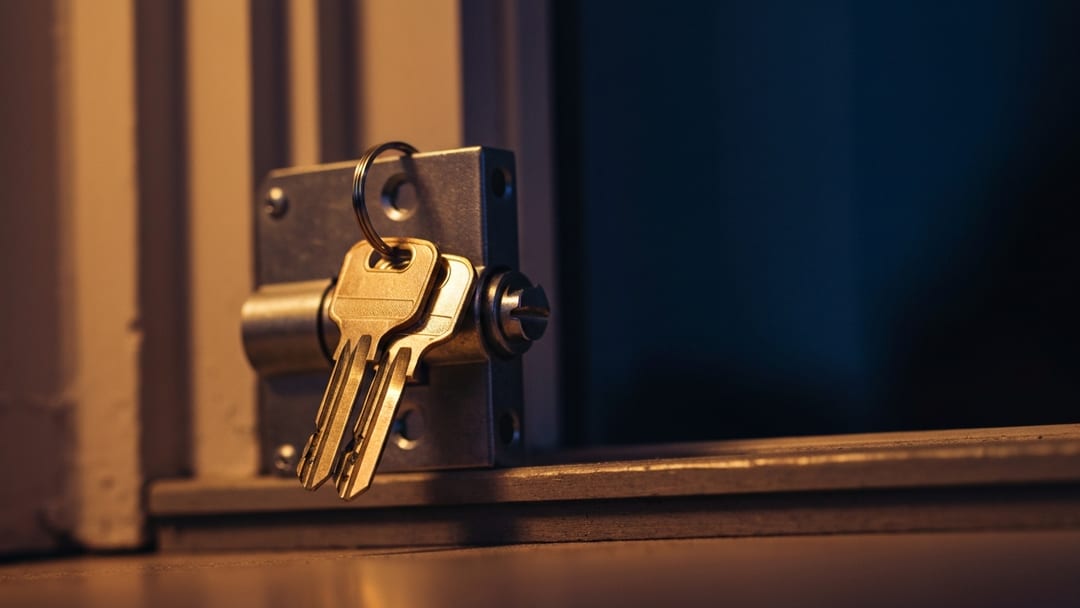
Quick answer: As of July 2026, an emergency rekey in Arlington typically runs $25–$45 per cylinder plus a service call, with most whole-house rekeys landing between $140 and $320. After a break-in or lost keys, rekeying re-pins your existing locks so every old key stops working — usually same day and cheaper than full replacement. The action plan: if there was a break-in, get everyone safe and file a police report (the FBI tracks burglary as a major property crime), then call or text Arlington TX Locksmith at (817) 330-5762 to have every exterior lock re-pinned the same evening so no prior key opens your door.
Why rekeying is the fast fix after a break-in or lost keys
A break-in or a lost set of keys comes down to one frightening fact: someone you do not control may be able to walk through your front door. Rekeying is the fast answer. A locksmith re-pins the cylinders you already own so that every key cut to the old pattern is instantly useless, without removing or replacing the lock hardware. The Associated Locksmiths of America describes rekeying exactly this way — re-pinning an existing cylinder so previous keys no longer operate it — and it is a standard, recognized service, not an upsell improvised on the spot.
The appeal of rekeying is speed and cost. Because the technician reuses your existing locks, the job is faster than swapping out hardware and almost always cheaper. For an Arlington homeowner who just got home to a forced door, or who realized a keyring is gone, the goal is to make every old key dead before nightfall — and rekeying does that in a single visit. The work itself is skilled trade work: the U.S. Bureau of Labor Statistics tracks locksmiths and safe repairers as occupation 49-9094, which is to say re-pinning a cylinder is a documented craft with a real labor value, not a gimmick.
The decision rule is simple. If your hardware is intact and only the keys are compromised, rekey. Replacement — covered below — is for when the lock body itself is broken or you want to upgrade. Most lost-key and many break-in situations fall squarely in the rekey column.
It helps to understand what actually happens inside the lock. A pin-tumbler cylinder works because a stack of small pins lines up at a precise height when the correct key is inserted, letting the plug turn. Rekeying swaps those pins for a new set cut to a different height pattern, so a new key works and every old key no longer reaches the line. Nothing about the door, the deadbolt body, or the strike plate has to change — the technician is essentially reprogramming the lock you already own. That is why it is fast, and why it costs less than buying and installing entirely new hardware on every door.
The same-day action plan, step by step
Move fast but in the right order. Step one is safety: if you suspect someone may still be inside or nearby after a break-in, do not go in — get to a safe place and call 911. Your locks can wait ten minutes; your safety cannot.
Step two, if there was a break-in, is to file a police report. The FBI Uniform Crime Reporting Program tracks burglary as a major property-crime offense, and a report does two things for you: it documents the incident for any insurance claim, and it creates an official record if anything was taken. A rekey does not require a police report and does not have to wait for one — but filing it is part of protecting yourself fully, so start the process and let the locksmith work in parallel.
Step three is the rekey itself. Call a mobile locksmith, describe the situation — break-in versus simple lost keys, how many exterior doors you have, what part of Arlington you are in — and get an all-in price and a live ETA. Have every exterior lock re-pinned: front door, back door, side or garage entry door, and any gate or shed lock you rely on. The Federal Trade Commission's standing advice applies here too: get the estimate in writing and be wary of any price that seems too good to be true, because a vulnerable homeowner after a break-in is exactly the target a scam operator looks for. Done right, the whole plan resolves the same evening, and by the time you go to bed no previously-cut key opens your home.
While the locksmith works, use the time to handle the parallel tasks a break-in creates. Photograph any damage to the door, frame, or window before it is repaired, since those images support both the police report and an insurance claim. Make a quick list of anything that appears to be missing. If a window or a door was damaged badly enough that it will not secure properly, tell the technician — that may turn part of the visit into lock repair or hardware replacement rather than a simple rekey, and it is better to know before the work is priced. Handling these steps in parallel means that by the time the last cylinder is re-pinned, you have documented the incident, secured the home, and reset every key in a single evening rather than dragging the process across several stressful days.
Rekey vs replace: how to decide
The line between rekeying and replacing is about the hardware, not the emotion of the moment. Rekey when the lock works mechanically and the only problem is who might have a key — lost keys, a moved-out roommate, a former tenant, a break-in where the door was forced but the lock cylinder is undamaged. The Associated Locksmiths of America frames rekeying as the appropriate response when you want existing keys to stop working but the lock is otherwise sound.
Replace when the lock body itself is damaged — a deadbolt that was pried and no longer throws cleanly, a cylinder cracked during a forced entry, hardware so old it is failing. Replacement is also the right call when you want to upgrade the grade of the lock for better security going forward. A break-in is often a natural moment to do both: rekey the doors that held, replace the one that was breached, and bring the whole house back to a single new key.
Cost usually tilts toward rekeying because it reuses your hardware, but the honest answer depends on what the technician finds. As of July 2026, typical Arlington-area rekey pricing looks like this — typical ranges, not fixed quotes, confirmed all-in on the phone before dispatch:
| Rekey job | Typical Arlington range (2026) |
|---|---|
| Per cylinder (re-pin existing hardware) | $25–$45 per lock, plus the service call |
| Whole house, 3–5 exterior locks keyed to one new key | $140–$320 all-in |
| After-hours or same-evening emergency visit | add roughly $40–$80 to the above |
| This is another reason the up-front, in-writing price the FTC recommends matters: a trustworthy Arlington locksmith will tell you on inspection which doors can be rekeyed and which need new hardware, and price each clearly, rather than defaulting to the most expensive option. If a door was damaged in the break-in, that may also call for lock repair as a separate, clearly-priced line. |
Making sure no old key opens your door tonight
The whole point of an emergency rekey service is a clean break with every key that existed before. To get there, account for all your exterior access, not just the front door. Many Arlington homes have a back door, a garage entry door, a side gate, and sometimes a separate storage or shed lock — a key to any one of those is a way in. Rekeying every exterior cylinder to one new key closes all of them at once and leaves you with a single working key for the house.
Think about who has had a key, too. After a break-in the urgent threat is obvious, but lost keys deserve the same rigor: a dropped keyring in a Parks Mall parking lot or near the Entertainment District is a key plus, often, an address from other items in the bag. Rekeying makes that found key worthless. If you have given spares to family, neighbors, or service people over the years, a rekey is the moment to reset that list deliberately and re-issue only the copies you actually want in circulation.
Finally, treat the rekey as the security baseline it is. Arlington is a large city, and the FBI's openly published burglary data lets any homeowner see that property crime is a real, ongoing category — not a reason to panic, but a reason to make sure the locks you depend on are actually controlled by you. A same-day rekey of every exterior lock, priced up front and done by a technician working within the Texas DPS Private Security framework, is the most direct way to know that tonight, your key is the only key.
What the rekey visit actually looks like
For a homeowner who has never watched one, the rekey itself is reassuringly undramatic. The technician removes each lock cylinder from the door — usually a few screws and a clip, with the door hardware staying in place — and opens the cylinder to access the pin chambers. The old pins come out, a new set cut to a fresh key pattern goes in, the cylinder is reassembled and reinstalled, and the new key is tested in the working lock. On a typical Arlington home with a front, back, and garage-entry door, the whole process is a single short visit, not a day-long project.
A good technician does a few things beyond the bare mechanics. They confirm how many exterior doors and gates you actually rely on, so none get missed — the back door or side gate is exactly the one people forget, and it is just as much a way in as the front. They check that each lock operates smoothly after the rekey, because a cylinder that was already stiff is worth flagging before it becomes a stuck or broken key down the line. And they hand you a clear count of how many working keys now exist, so you leave the visit knowing exactly how many copies are in circulation and who has them.
Because rekeying reuses your existing hardware, it is also a chance to consolidate. If your home accumulated mismatched locks over the years — a front door on one key, a back door on another, a garage entry on a third — the technician can rekey all of them to a single new key in the same visit. The Associated Locksmiths of America describes this kind of keying-alike as a routine part of the service. For most households the convenience of one key for the whole house is worth as much as the security reset that prompted the call in the first place.
Other times an Arlington rekey makes sense
A break-in or lost keys are the urgent triggers, but they are not the only times a rekey is the smart move. The most common non-emergency reason is moving into a new home. When you buy or rent a place in Arlington, you have no real way of knowing how many keys are floating around from previous owners, former tenants, real-estate agents, contractors, cleaners, or neighbors who were handed a spare years ago. A rekey on move-in day resets that completely — the Associated Locksmiths of America treats this as one of the textbook uses of the service — so the only keys that work are the ones you cut and handed out yourself.
Tenant turnover is another. Landlords and property managers around the UTA area and across south Arlington rekey between tenants precisely because they cannot account for every copy a departing renter may have made. It is faster and cheaper than replacing hardware on every unit, and it gives the incoming tenant a genuinely fresh start. The same logic applies to short-term rental hosts who hand out keys to a rotating stream of guests.
Then there are the relationship-driven cases that nobody likes to think about but everybody eventually faces: a divorce or separation, a roommate who moved out on bad terms, an ex-partner who never returned a key, a former employee with access to a home office. None of these require a forced door to be a real security gap. A quiet, same-day rekey closes the gap without drama, and because it reuses your existing locks, it is a low-cost way to take back control of who can enter your home. Whenever the answer to "who has a key?" is "I am not entirely sure," a rekey is the direct fix.
Small businesses around Arlington face the same question on a larger scale. A shop near the Entertainment District or an office off the I-20 corridor that has cycled through staff over the years rarely knows how many keys are still out there, and a single unaccounted-for copy is a standing risk to inventory, cash, and records. Rekeying the exterior and interior locks on a schedule — or after any departure that ended badly — is a routine security practice that the Texas DPS Private Security framework recognizes as part of legitimate locksmith work. For a business as much as a home, the principle holds: control of the keys is control of the door, and a rekey is how you reclaim it without replacing a single piece of hardware.
"Get an estimate in writing before you agree to any work, and be wary of a price that seems too good to be true."
— U.S. Federal Trade Commission, Consumer Advice — Avoiding Locksmith Scams
Sourced statistics
- The FBI Uniform Crime Reporting Program publishes burglary as one of its tracked property-crime offenses, with figures openly available in the Crime Data Explorer so any Arlington homeowner can size their own risk. — FBI Uniform Crime Reporting Program (2024)
- The Associated Locksmiths of America describes rekeying as re-pinning an existing lock cylinder so previous keys no longer operate it — a recognized service distinct from replacing the lock. — Associated Locksmiths of America (ALOA) (2024)
- Texas regulates locksmith companies under the Department of Public Safety Private Security Program, so an emergency rekey after a break-in should come from an operator working within that state framework. — Texas Department of Public Safety, Regulatory Services Division (2024)
- The U.S. Bureau of Labor Statistics tracks locksmiths and safe repairers as occupation 49-9094, confirming rekeying and re-pinning as recognized skilled trade work rather than an upsell invented at the door. — U.S. Bureau of Labor Statistics (OEWS) (2024)
Related services
Need every old key dead by tonight?
Arlington TX Locksmith runs same-day mobile emergency rekey service across Arlington, from the UTA area to the neighborhoods along the I-20 corridor. Call or text (817) 330-5762 for an up-front, all-in price and a live ETA — or text how many exterior doors you have to (817) 330-5762 and we will send back a quote by message.
Frequently asked questions
Should I rekey or replace my locks after a break-in in Arlington?
If the hardware is undamaged, rekeying is faster and cheaper — the locksmith re-pins the cylinder so old keys no longer work. Replacement is only needed when the lock body itself is broken or you want to upgrade the grade of security.
How fast can I get an emergency rekey in Arlington?
A mobile locksmith can typically re-pin every exterior lock on an Arlington home the same day, often within hours, so no previously cut key opens your door by nightfall.
Do I need a police report to rekey after a break-in?
A rekey does not require a police report, but filing one documents the incident for insurance and any follow-up. The rekey itself can proceed immediately regardless.
Will rekeying make all my doors use one key?
Yes. A locksmith can rekey multiple locks to a single new key, so a four-lock Arlington house can be brought back to one working key in one visit.
Is rekeying cheaper than replacing the locks?
Usually, yes. Rekeying reuses your existing hardware and only re-pins the cylinder, so it costs less than buying and installing new locks. Replacement is reserved for damaged hardware or a deliberate security upgrade.
Sources cited
- FBI Uniform Crime Reporting Program — Crime Data Explorer — Burglary offenses (2024)
- U.S. Federal Trade Commission — Consumer Advice — Avoiding Locksmith Scams (2023)
- Associated Locksmiths of America (ALOA) — Find a Locksmith / Professional Standards (2024)
- Texas Department of Public Safety, Regulatory Services Division — Private Security Program — locksmith company licensing (2024)
- U.S. Census Bureau — QuickFacts — Arlington city, Texas (2024)
- U.S. Bureau of Labor Statistics (OEWS) — Occupational Employment & Wages, 49-9094 Locksmiths and Safe Repairers (2024)