Roadside Lockout on I-20 or Highway 360 in Arlington — Safety First
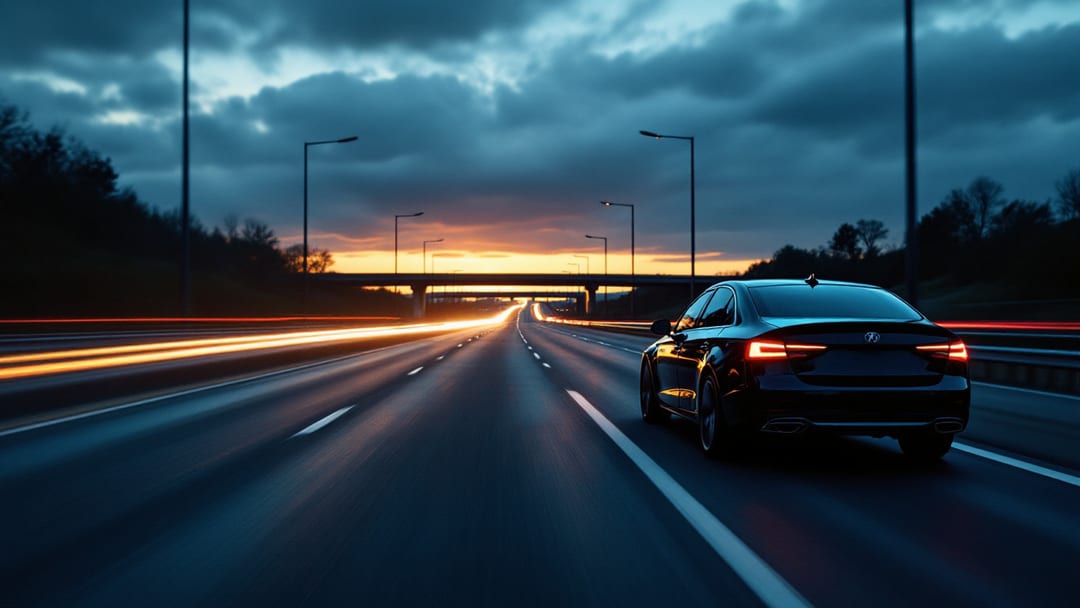
As of August 2026, a roadside lockout in the Arlington area typically runs $90 to $180 in daylight and $120 to $220 after hours — but on a highway shoulder the price is the least important thing in the first five minutes. Get away from the traffic side of the vehicle, then call (817) 330-5762. This guide covers where to stand, what to tell whoever you call, how I-20 and Highway 360 differ from a parking-lot lockout in ways that affect arrival time, and how to avoid being taken advantage of when you are visibly stranded.
The first five minutes
A shoulder lockout is a safety event that happens to involve a locked door. Handle it in that order.
Get off the traffic side. Move to the passenger side of the vehicle and then further — behind a guardrail, up an embankment, past a barrier. Do not stand between your car and moving lanes. Do not stand at the driver's door working at the window while traffic passes at seventy miles an hour a few feet away.
Hazards on. Do it before you get out if you can, or reach in if the door is open on the safe side.
Decide whether to be in or out of the vehicle. If you can get safely behind a barrier, that is generally better. If the shoulder is narrow, there is no barrier, the weather is bad, or the surroundings feel wrong, staying belted inside with the doors locked and hazards running is the more defensible choice. There is no universal answer — AAA's roadside safety guidance covers the tradeoff, and the honest version is that it depends on your actual conditions.
Call 911 if anyone is inside the vehicle. Do not wait for a locksmith in that situation. North Texas interior temperatures climb fast, as the National Highway Traffic Safety Administration's heatstroke material documents, and emergency services can enter immediately. Our guide on a child or pet locked in a car covers the sequence.
Then call for the lockout. Only once you are somewhere you would be willing to stand for twenty minutes.
What to tell the dispatcher
Location detail on a highway is worth more than anywhere else, because a divided highway punishes a wrong guess with a full interchange loop.
Give five things: the highway, the direction of travel, the nearest exit number or cross street, whether you are before or past it, and the vehicle's colour and body style. Share your phone's live location if the platform allows it. Then add whether the passenger side is approachable and whether you are inside the car or behind a barrier.
Direction of travel is the detail people most often omit and the one that most often costs fifteen minutes. "I-20 near Cooper" describes two locations separated by a concrete barrier.
"On a shoulder call the first question is never the car. It is where the customer is standing. If they are on the traffic side I want them moved before we talk about anything else." — lead technician, Arlington TX Locksmith
Why Arlington's two big corridors behave differently
I-20 runs east–west across the south of the city and is the classic long-shoulder freeway lockout: wide shoulders in most stretches, high speeds, and access dictated entirely by which side of the divide you are on. Exits are spaced far enough apart that a wrong-direction approach is genuinely expensive in time. Our I-20 corridor page covers the area we cover along it.
Highway 360 runs north–south along the eastern edge and behaves differently. Frontage roads and closely spaced access points make approach easier in many stretches, but it carries heavy commuter and event traffic, and the stadium district sits right beside it. On an event day the same call can take substantially longer through no fault of anyone's dispatch. The Highway 360 corridor page has the detail.
Two practical consequences. First, mention any event when you call — the entertainment district reshapes traffic for hours in both directions, and car lockouts at AT&T Stadium and Globe Life Field covers what that means in practice. Second, an arrival estimate that ignores where you are and what day it is has not been calculated at all — car lockout response times explained sets out what a realistic window looks like.
Arlington cost ranges for roadside lockouts in 2026
Real numbers for this market. Proof of ownership and photo identification are required before any vehicle is opened — including on a shoulder.
| Situation | Typical Arlington range (2026) | Notes |
|---|---|---|
| Daytime shoulder lockout, 8am – 6pm | $90 – $160 | Slightly above lot rates for staging |
| Evening, 6pm – 10pm | $105 – $180 | Traffic-dependent |
| Overnight, 10pm – 6am | $120 – $220 | After-hours rate applies |
| Event-day access near the stadium district | $110 – $200 | Longer window, not a higher rate per se |
| Emergency blade cut for a keyless fob | $70 – $150 additional | If the concealed blade is missing |
| Keys visibly locked inside, standard entry | Included in the rates above | No extra charge for "difficulty" |
Anyone quoting far below this band on a highway call is describing something other than the finished job. That is the bait-and-switch pattern the Federal Trade Commission's guidance on avoiding locksmith scams describes, and stranded motorists are the group it targets most.
Why stranded people get overcharged, and how not to be
Visible distress changes the negotiation. Standing on a shoulder, you are unlikely to shop three providers, and some operators price accordingly.
Three filters take under a minute even in a bad situation.
Get a firm total on the phone, including any trip charge. Not "starting at". A range with a stated top end.
Ask for the company name and confirm it matches how they answer. A generic "locksmith service" greeting on a call you placed to a named company is a dispatch-network tell.
Know the regulator. Texas locksmith companies are regulated by the Texas Department of Public Safety Private Security Program. Anyone claiming TDLR licensing for locksmith work has named an agency that does not regulate this trade.
If the number changes on arrival, you are entitled to decline the work and pay nothing beyond a disclosed trip charge. Our guide to avoiding locksmith scams in Arlington walks through the rest, and what to do while you wait for a locksmith covers the waiting period itself.
When it is not actually a lockout
Two situations that present as roadside lockouts and are not.
The 12V battery is dead. On a keyless car, a flat vehicle battery means the fob cannot open anything and the car shows no signs of life. That is a different problem with a different solution, and the concealed emergency blade in your fob often resolves it in ninety seconds — push-start car with a dead 12V battery covers exactly this.
The key is lost rather than locked inside. If the key is genuinely gone, opening the door does not get you moving. That is a key origination job, and on a shoulder it usually means moving the vehicle first. Lost car key with no spare sets out the sequence, and same-day car key replacement covers what is realistic in one visit.
Describing which of these you actually have, on the phone, is what determines whether the right van arrives with the right parts.
Reducing the odds of a shoulder lockout entirely
Nobody plans one, but a few habits make it far less likely.
Do not use a hide-a-key box on the exterior. It is found more often than owners believe, and it converts a lockout into a theft risk.
Carry a spare credential separately. Not in the same bag as the primary. A spare that lives in a wallet or with a family member turns a shoulder lockout into a phone call.
Know your fob's emergency blade. Find it once, at home, in daylight. On a keyless car it is the difference between a five-minute problem and a two-hour one.
Watch the 12V battery. A battery over roughly four years old, or one cranking slowly, is a scheduled replacement. The Consumer Reports car maintenance library covers testing and expected life, and so does Edmunds' maintenance guidance.
And while you have the VIN handy for anything else, an open-recall check through NHTSA is free and occasionally relevant to door and latch hardware.
Getting help in Arlington
We come to the vehicle, shoulders included, across south Arlington, east Arlington, the I-20 corridor and the Highway 360 corridor.
Car lockout service is the page for the door itself, and emergency lockout covers after-hours and urgent calls. If a blade snapped off in the lock while you were trying to get in, broken key extraction is the right starting point.
Call or text (817) 330-5762 with the highway, your direction of travel and the nearest exit, and you will get a firm price and a realistic window before anyone rolls. The contact page works if you are somewhere safe and would rather write it out.
Frequently Asked Questions
I am locked out of my car on the shoulder of I-20 in Arlington. What do I do first?
Get away from the traffic side of the vehicle before anything else. Move behind the guardrail or well up the embankment on the passenger side, never stand between your car and moving lanes, and never sit inside a vehicle stopped on a live shoulder if you can safely be off it. Then call for help from that position. The price of the lockout is not the risk here — the shoulder is.
How much does a roadside lockout cost in Arlington TX?
As of August 2026, a highway-shoulder lockout in the Arlington area typically runs $90 to $180 during the day and $120 to $220 after hours. Shoulder calls sit slightly above parking-lot rates because access, positioning and safety staging take longer. You should still get a firm number on the phone before dispatch — an unwillingness to quote one is a warning sign regardless of where you are stranded.
Should I call the police or a locksmith for a highway lockout?
Call 911 if anyone is inside the vehicle, if you feel unsafe where you are standing, or if the car is blocking a live lane. Law enforcement can provide traffic protection and, in some situations, entry. If you are safely off the roadway and it is purely an access problem, a locksmith is the right call. The two are not in competition — safety first, access second.
Will a locksmith come out to a freeway shoulder?
Yes, and it is routine work. Tell the dispatcher which highway, which direction of travel, the nearest exit or mile marker, and which side of the vehicle is safe to approach. That detail matters more on a shoulder than anywhere else, because a technician arriving from the wrong direction on a divided highway can add fifteen minutes doubling back through the next interchange.
What location details should I give when I call from a highway?
Highway name, direction of travel, nearest exit number or cross street, and whether you are before or past it. Add the vehicle colour and body style, and share your phone's live location if you can. Direction of travel is the single most valuable detail — on I-20 and SH 360 the two sides are separated, and the wrong one means driving to the next interchange and coming back.
Is it safe to wait inside my car on the shoulder?
If you can get safely behind a barrier or well away from the traffic side, that is generally the better choice. If leaving is not safe — heavy rain, no barrier, a narrow shoulder, or a personal-safety concern about the surroundings — stay belted inside with hazards on and the doors locked, and tell the dispatcher that is what you are doing. There is no single right answer; describe your actual conditions and follow the guidance you are given.
Does an event at the stadium district change how long help takes?
Yes, significantly. Event traffic around the entertainment district reshapes access on SH 360 and the surrounding arterials for hours before and after, and any honest arrival estimate should account for it. Mention the event when you call. A company that quotes you the same window on a game night as on a quiet Tuesday morning is not looking at a map.