Push-Start Car, Dead 12V Battery, Doors Locked — Arlington TX Guide
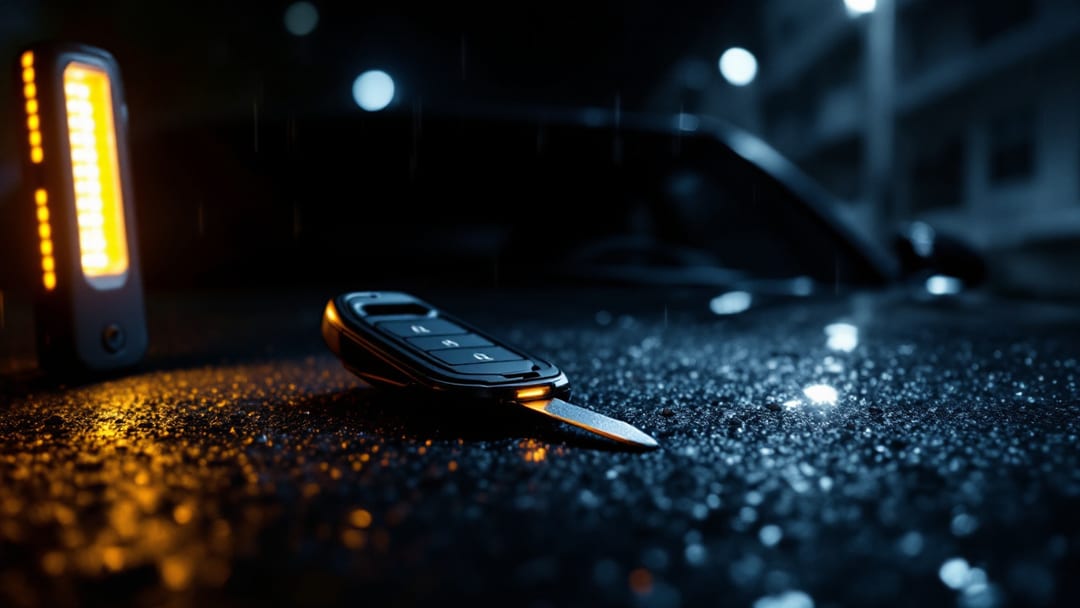
As of August 2026, an Arlington lockout on a keyless push-start car with a dead 12V battery typically runs $75 to $150 in daylight and $95 to $200 after hours — and a meaningful share of these calls end without a locksmith at all, because the answer is hiding inside your own fob. Call or text (817) 330-5762 if you are standing next to the car right now. This guide covers what to check in the first two minutes, why keyless cars fail this specific way, what we actually do when you cannot get in, and how to make sure it never happens twice.
Why a dead battery locks you out of a keyless car specifically
On a car with a traditional key, a flat battery is annoying but not an access problem — the key still opens the door mechanically and the only question is how to get a jump.
Proximity keys changed that relationship. Your fob does not open the door; it asks the car to open the door. That request requires the vehicle's own 12V battery to power the receiver, the body control module and the lock actuators. When the 12V battery is genuinely flat, none of that is available. The fob still transmits perfectly and the car simply cannot hear it.
The result is an owner standing beside a car that shows no sign of life, holding a key that has stopped functioning as one. It is a modern failure mode, and it catches people who have never had a lockout in thirty years of driving.
Manufacturers anticipated it, which is why two backups are built into nearly every keyless vehicle on the road.
The two backups almost every owner forgets
The emergency blade inside the fob. Nearly every proximity fob conceals a mechanical key blade, released by a small slider, catch or button on the housing. It is deliberately unobtrusive, and a very large number of owners have never removed it or even noticed it exists.
The concealed keyhole on the driver's door. On many vehicles the driver's door lock is visible. On many others it is hidden beneath a small cap on the handle, or behind the handle itself, popped off with the tip of the emergency blade or a plastic trim tool.
Together, those two things resolve a genuinely large share of dead-battery lockouts in about ninety seconds and cost nothing. It is worth finding both on your own car this week rather than at eleven at night in a parking lot.
Two honest caveats. On some vehicles the blade was never cut to the vehicle's code by the selling dealer, so it exists but does not turn anything. And on cars where the concealed lock has gone unused for a decade, the cylinder is sometimes seized with grit. Both of those are exactly when you need help.
What we actually do when the backups fail
The route depends on which backup broke.
Blade missing or never cut. We cut a replacement emergency blade to the vehicle's code on-site. That gives you access now and a permanent backup afterwards, which is the outcome most owners would have wanted anyway.
Concealed lock seized. Non-destructive entry through the door using tools designed for the vehicle's build, with wedges that protect paint and weatherstripping. This is standard work and it does not damage a car when it is done properly.
Blade fits but the door still will not open. Occasionally the linkage or a frozen actuator is the real problem rather than access, and that changes the conversation entirely.
Once you are inside, the car still needs power. A locksmith visit gets you into the vehicle; a jump, a boost pack or a replacement battery gets it running. Some owners need both, and it is worth saying which you need when you call so the right help arrives.
"Half of these calls, I get there and hand the customer their own fob with the blade slid out. They had it in their pocket the whole time. I would much rather tell someone that on the phone for free." — lead technician, Arlington TX Locksmith
Arlington cost ranges in 2026
Real numbers for this market. Proof of ownership and photo identification are required before any vehicle is opened — every legitimate company asks, and being asked is a good sign.
| Time of the call | Keyless lockout range (Arlington) | Notes |
|---|---|---|
| Weekday daytime, 8am – 6pm | $75 – $130 | Standard non-destructive entry |
| Evening, 6pm – 10pm | $85 – $160 | Higher end for outlying areas |
| Overnight, 10pm – 6am | $110 – $200 | After-hours rate applies |
| Major holidays | $130 – $250 | Limited availability, call early |
| Emergency blade cut to vehicle code | $70 – $150 additional | Permanent fix, worth doing while we are there |
| Phone triage that resolves it | No charge | We would rather talk you through the fob |
Anyone quoting a headline number far below this band is describing something other than the finished job. That pattern is documented directly in the Federal Trade Commission's guidance on avoiding locksmith scams, and it is the most common complaint in this trade nationally.
Safety first if it is dark, hot, or roadside
Two situations change the priorities completely.
A person or animal is inside the vehicle. Stop reading and call 911 first. Interior temperatures in a closed car climb dangerously fast in North Texas, and the National Highway Traffic Safety Administration's heatstroke prevention material documents how quickly. Emergency services can force entry immediately; a locksmith is the right call for property, not for a life. Our guide to a child or pet locked in a car covers the sequence.
You are on a shoulder or in an unlit lot. Get to a lit, populated spot if the vehicle position allows it and wait there rather than beside the car. AAA's roadside safety guidance is straightforward on this point. Share your live location with someone, and stay on the line with the dispatcher if the setting feels wrong.
Our guide to what to do while you wait for a locksmith covers the rest of the waiting-period checklist.
Why the 12V battery died in the first place
Worth understanding, because the lockout is the symptom rather than the disease.
Modern vehicles draw a small continuous current even when parked — for the alarm, the telematics module and the receiver listening for your fob. A healthy battery absorbs that easily. A battery near the end of its life does not, particularly after a stretch of extreme heat, and North Texas summers are hard on them.
Two patterns account for most of these calls. A vehicle sat unused for a week or more and the parasitic draw finished off a marginal battery. Or an interior light, a door left ajar, or an accessory was left powered.
Practical takeaway: a battery over roughly four years old, or one that has started cranking slowly on cold mornings, is a scheduled replacement rather than a gamble. The Consumer Reports car maintenance library and Edmunds' maintenance guidance both cover testing and expected service life.
When the fob is the problem instead
Sometimes the car is fine and the fob has quit. That presents very differently — the dash lights work, the interior lamps come on when you open a door with the blade, and the car simply will not detect the key. That is a fob battery or a fob failure, not a vehicle battery failure, and it is a much cheaper problem. Start with fob battery versus a genuinely dead fob.
If the fob has failed outright rather than gone flat, replacement and programming is the route, and cost varies enormously by brand — how much car key replacement costs in Arlington sets out the average cost of an automotive locksmith visit across common vehicles, and Genesis G70 and GV80 smart key replacement is a worked example on a modern proximity platform.
Preventing the repeat
Three habits, none of which take more than five minutes.
Find your emergency blade now. Take it out, look at it, put it back. Confirm it is actually present — fobs that have been through a dealer trade sometimes are not.
Confirm the concealed door lock works. Find the keyhole, remove the cap if there is one, and confirm the blade turns it. A cylinder that has never been used in ten years is the one that seizes.
Replace an aging 12V battery on schedule. This is the root cause. Everything else is a workaround.
One more worth adding for proximity-key owners generally: keep fobs away from exterior walls and windows overnight, or in a signal-blocking pouch. That is unrelated to the battery issue but addresses the relay-attack risk that the Insurance Institute for Highway Safety tracks across vehicle categories, and it costs almost nothing.
Getting help in Arlington
We come to the vehicle wherever it sits — downtown Arlington, the entertainment district, the UTA area, Lake Arlington and the corridors in between.
If you simply need the door opened, car lockout service is the page. If the emergency blade snapped off in the concealed lock, broken key extraction is where to start. For a broader look at what an after-hours call involves, locked out at 3am in Arlington covers the overnight scenario, and car lockout response times explained covers what "on the way" should actually mean.
Call or text (817) 330-5762 and describe what the car is doing — lights, no lights, clicks, nothing. Half the time we can talk you into your own vehicle for free. The contact page works if you are not standing in a parking lot.
Frequently Asked Questions
My keyless car's battery is dead and the doors will not unlock. What do I do first?
Look at your fob. Nearly every proximity fob hides a mechanical emergency blade behind a small release catch or slider, and nearly every keyless car has a physical keyhole on the driver's door, sometimes concealed under a small cap on the handle. Those two things exist together for exactly this situation. If the blade is missing or the concealed lock is seized, that is when a locksmith is genuinely needed.
How much does a keyless-car lockout cost in Arlington TX?
As of August 2026, an Arlington keyless-entry lockout typically runs $75 to $150 during the day and $95 to $200 after hours, depending on the vehicle and the time of night. Cutting a replacement emergency blade to your vehicle's code, if yours was lost or never cut, is usually an additional charge. You should get a firm number on the phone before anyone is dispatched.
Why does the alarm go off when I use the emergency key on the door?
Because the vehicle cannot verify the fob electronically while its battery is dead, so a door opened mechanically reads as a forced entry. On most cars the alarm has no power to sound in this state anyway, but if the battery recovers slightly it may trigger. Pressing the start button with the fob held against the marked spot, or restoring power, generally clears it. It is expected behavior rather than damage.
Can I still start the car once I get the door open?
Not on the car's own power if the 12V battery is genuinely flat, because push-button start needs that battery regardless of your fob. Once the vehicle has power again through a jump or a boost, most keyless systems have a backup procedure where the fob is held against a specific marked location on the column or console so the car can read it directly. Your owner's manual identifies that spot for your model.
Is the 12V battery the same thing as my key fob battery?
No, and confusing them wastes a lot of time. The fob battery is a small coin cell that only powers the remote; when it dies, the car itself is fine and the fob usually still works held against the reader. The 12V battery is the vehicle's own battery and powers the door locks, the dash and the starter. A dead 12V leaves you outside a car that shows no signs of life at all.
Will a locksmith damage my car getting into a keyless vehicle?
A properly executed lockout does not damage the vehicle. On keyless cars the usual route is the concealed mechanical lock rather than tools inside the door, which is both faster and lower risk. Where the concealed lock is not usable, standard non-destructive entry tools are used with wedges that protect the paint and weatherstrip. Ask about the method before dispatch — a company that will not describe it is a company to skip.
How do I avoid this happening again?
Three habits cover almost all of it. Know where your fob's emergency blade is and confirm it is actually there before you need it. Confirm the concealed keyhole on your driver's door and that the blade turns in it. And treat a slow crank or a battery over about four years old as a scheduled replacement rather than waiting, since a 12V battery that dies while parked is what creates this situation in the first place.