Car Lockout in Arlington: How Fast Can a Locksmith Reach You?
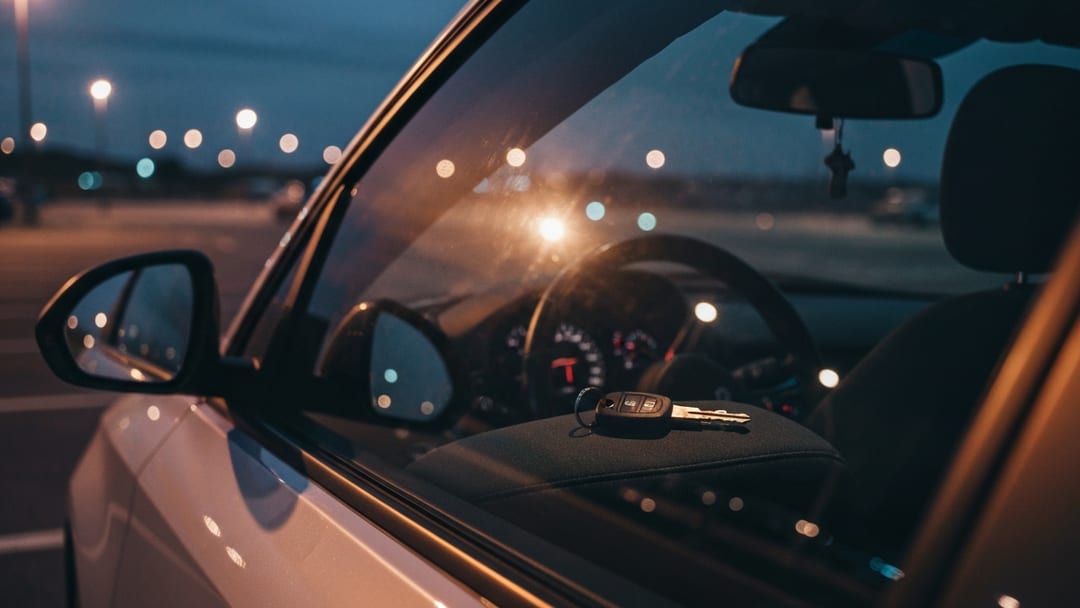
Quick answer: As of July 2026, mobile locksmith response time for a car lockout in Arlington is driven by three things: how far the nearest technician is, the time of day, and traffic on I-20 and Highway 360 — and a standard daytime lockout typically runs $65–$120. Arlington TX Locksmith answers with a live ETA and an all-in quote at (817) 330-5762 rather than a vague "on our way." While you wait, move somewhere safe and do not try to pry the door — the National Highway Traffic Safety Administration and AAA both note that forcing a vehicle door risks damage far costlier than the lockout itself.
The only number that matters: your ETA
When you are locked out of your car in Arlington, you do not need a sales pitch — you need to know how long the wait is. Honest response time depends on three concrete things: where the nearest available technician is, how heavy traffic is on the route, and the time of day. None of those are guesses, which is why a reputable mobile locksmith answers the phone with a live ETA instead of a hopeful "we are on our way."
That distinction is the whole game. A live ETA is a real estimate built from a real starting location and current road conditions. A vague promise is a dispatcher trying to keep you on the hook while they figure out whether anyone is actually free. AAA, which handles lockout calls as a standard part of its roadside program, treats the locked-out driver as someone who needs a clear timeline — and so should any locksmith you call. If the person on the phone cannot give you a time, that is information about the company.
Arlington is a big, sprawling city — the Census Bureau lists it among the largest in Texas — so "in Arlington" can mean a five-minute hop or a cross-town drive. A car lockout service near the Parks Mall is a different dispatch than one out by the Entertainment District or down the I-20 corridor. The ETA you are quoted should reflect which one you are.
Be wary of the company that promises the same headline number to everyone. A flat "we are always there in 15 minutes," printed on every ad and repeated to every caller regardless of where they are, is a marketing line, not an estimate — and it is physically impossible to honor across a city Arlington's size. The honest answer changes from call to call because the inputs change from call to call. A dispatcher who asks where exactly you are before giving you a time is doing the math you actually want done; one who recites a fixed number before you have finished your sentence is reciting a script.
What actually slows a locksmith down in Arlington
The single biggest variable in your wait is traffic, and Arlington has some of the busiest roads in the Metroplex running straight through it. Daily traffic volumes on corridors like Interstate 20 and State Highway 360 are consistently heavy. A technician who is ten miles away on paper can be twenty minutes away in practice when those corridors are backed up.
Time of day stacks on top of that. Morning and evening rush hours turn a quick cross-town drive into a crawl, and event days near the Entertainment District — with major venues drawing big crowds — can choke the roads around them for hours. A locksmith who knows Arlington builds those realities into the ETA instead of quoting a best-case time that ignores them.
Dispatch distance is the third factor. A company with a technician already near you can be there fast; one routing a driver from the far side of the city, or from outside Arlington entirely, cannot — no matter what they promise. This is why a live ETA is more honest than a flat "30 minutes" promise plastered on every ad: the real number changes with where the nearest van actually is. When you call for a car lockout, the dispatcher should be able to tell you, right then, roughly how far out the assigned technician is.
Arlington's geography makes this especially pronounced. The city stretches from the Grand Prairie line in the north down past I-20 toward Mansfield in the south, with the UTA campus, the Parks Mall, and the Entertainment District scattered across that span. There is no single point from which a technician can reach all of it quickly. A car lockout in the 76018 ZIP down south and one in the 76006 ZIP up north are genuinely different drives, and any ETA that ignores which one you are in is ignoring the most important variable. The more specific you are about your location — a cross street, a store entrance, a parking-lot row — the more accurate the time you get back.
What to do while you wait — and what not to do
The minutes between your call and the technician arriving are when most avoidable damage happens, because a stressed driver starts improvising. The most important rule is the simplest: do not try to force the door or window. Modern vehicles are full of wiring, sensors, and weatherstripping packed into the door frame, and the National Highway Traffic Safety Administration notes that today's cars rely on electronic and transponder key systems — prying with a slim-jim or a coat hanger can damage power-window mechanisms, side-impact sensors, or the door skin itself. The repair bill for that dwarfs the cost of a clean professional entry.
Instead, use the wait wisely. Move to a safe, visible spot, especially at night or if you are stopped along a busy road. Keep your phone charged — your ETA, your location, and your call to the locksmith all depend on it. Have your details ready: your exact location (a cross street, a store name, or a parking-lot section), your vehicle make and model, and whether your keys are locked inside or actually lost. That last point matters, because lost keys may turn the job from a simple car lockout into key replacement.
If a child or pet is locked inside the vehicle in heat, treat it as an emergency and call 911 first — that is a safety situation, not a routine lockout, and first responders are equipped for it. For an ordinary locked-keys-in-car event, staying calm and staying put is the right call. AAA frames the locked-out driver's job as simply waiting safely for trained help, and that is exactly right.
How car lockouts are priced (and the scam to avoid)
Pricing for a car lockout follows the same honest structure as any mobile service call: a base charge to send a trained technician with the right tools, plus a clearly stated surcharge if it is overnight or a holiday. As of 2026, typical Arlington-area ranges by time of day look like this — typical ranges, not fixed quotes:
| Time of the call | Typical Arlington car lockout range (2026) |
|---|---|
| Weekday daytime (8am–6pm) | $65–$120 |
| Evening (6pm–11pm) | $80–$150 |
| Overnight, weekend late-night, or holiday | $95–$180 |
You should get that all-in number on the phone before the technician is dispatched, alongside your ETA. The tools differ from a house lockout — automotive entry uses long-reach and air-wedge techniques and, for many vehicles, transponder programming — but the pricing honesty is identical.
The scam to watch for is the same one the Federal Trade Commission warns about across all lockouts: a rock-bottom quote on the phone that balloons once the technician is at your car. The FTC's guidance is blunt — get an estimate in writing and be wary of a price that seems too good to be true. For a car lockout that means confirming the all-in total, including any after-hours surcharge, before you agree, and declining any work you did not ask for.
One more car-specific note: if your keys are lost rather than locked inside, opening the door is only half the job. The National Highway Traffic Safety Administration's vehicle-theft guidance underscores that a key floating around unaccounted-for is a real security gap, especially with modern transponder systems. An honest technician will tell you when key replacement or reprogramming is the right next step — and quote it separately and clearly, not bury it in a vague "emergency" fee.
How a mobile locksmith actually opens a locked car
Knowing what the technician will do removes a lot of the anxiety of waiting, and it also helps you spot the difference between a pro and an amateur. For most vehicles, a trained locksmith opens the door without touching the lock cylinder at all. The common methods are a long-reach tool — a slim rod fed through a tiny gap at the top of the door frame, protected by an air wedge that gently creates that gap without bending the frame — used to press the unlock button or pull the manual lever from inside. Done correctly, this leaves no mark on the vehicle. The Associated Locksmiths of America treats this kind of non-destructive entry as the standard a skilled technician works to.
What you should not see is anyone going at the door with a slim-jim between the weatherstripping and the glass, or prying the frame with a screwdriver. Older slim-jim techniques can snag the wiring, airbag sensors, and power-lock linkages packed into a modern door, and the National Highway Traffic Safety Administration's emphasis on the electronic systems in today's vehicles is exactly why that approach is risky. A reputable Arlington locksmith chooses the method that fits your specific make and model, because what safely opens one car can damage another.
The honest version of this work is also unhurried in the right way. A technician who knows the vehicle takes a moment to identify the lock type and the safest access point before doing anything, rather than attacking the door the second they arrive. That brief assessment is not stalling — it is the step that keeps a simple opening from turning into a body-shop bill. If you ever watch someone skip straight to force without looking at what they are working on, that is the moment to ask questions.
Locked out at a parking lot, a job site, or the side of the road
Where your car is locked changes the calculus, even if the lockout itself is the same. A car lockout in a well-lit Parks Mall parking structure at midday is a low-stress wait; the same lockout on the shoulder of I-20 at night is a safety situation first and an inconvenience second. AAA's roadside guidance puts safety ahead of speed for exactly this reason — a driver stranded near moving traffic should get well away from the travel lanes and wait somewhere visible, not stand beside the car fiddling with the door.
For lockouts at a workplace or job site, the practical issue is access and identification. Make sure the technician can actually reach the vehicle — gated lots, parking garages with attendants, and secured employee areas can all add minutes that have nothing to do with traffic. Telling the dispatcher about an access barrier up front lets them factor it into the ETA instead of discovering it on arrival. The same goes for apartment complexes around the UTA area, where guest parking and building numbers can be genuinely confusing after dark.
And if the lockout happens somewhere with a child or pet inside the vehicle, the rules change entirely. The National Highway Traffic Safety Administration's work on vehicle safety is a reminder of how quickly a closed car heats up; a child or animal locked inside on a warm Texas day is an emergency, not an errand. Call 911 first in that situation — first responders can force entry immediately and are equipped to do it safely. A locksmith is the right call for an empty locked car, not for one with someone trapped inside who cannot wait.
For everyday lockouts that are inconvenient rather than dangerous, the same preparation that helps your ETA also helps your safety. Keep a phone charger in the car so a dead battery never compounds the problem. Note the nearest cross streets or a business name as soon as you realize you are locked out, so you can hand the dispatcher a precise location instead of a guess. And if you are in a parking lot after dark, wait near the entrance of an open store or under a light rather than alone at the far edge of the lot. None of this changes how the locksmith opens the car, but it turns the wait from a tense one into a manageable one — and a calm driver is far less likely to make the kind of forced-entry mistake that turns a routine call into a repair bill.
"Get an estimate in writing before you agree to any work, and be wary of a price that seems too good to be true."
— U.S. Federal Trade Commission, Consumer Advice — Avoiding Locksmith Scams
Sourced statistics
- AAA documents lockout assistance as a core roadside service, reflecting how common locked-keys-in-car events are for everyday drivers. — AAA (American Automobile Association) (2024)
- The U.S. Census Bureau ranks Arlington among the largest Texas cities by population, so a single "Arlington" service area spans long cross-town drives that shape realistic ETAs. — U.S. Census Bureau (2024)
- The National Highway Traffic Safety Administration emphasizes that modern vehicles use electronic and transponder-based key systems, which is why forcing entry or improvising can cause expensive collateral damage. — U.S. National Highway Traffic Safety Administration (NHTSA) (2024)
Related services
- car lockout service
- emergency lockout service
- broken key extraction
- Arlington service areas
- contact us
Locked out right now in Arlington?
Arlington TX Locksmith runs mobile car lockout service across the city, from the Parks Mall to the Entertainment District and the I-20 corridor. Call or text (817) 330-5762 for a live ETA and an all-in price before anyone is dispatched — or text your location and vehicle make to (817) 330-5762 for a quote by message.
Frequently asked questions
How fast can a mobile locksmith reach my car in Arlington?
Response time depends on dispatch distance, time of day, and traffic on I-20 and Highway 360. A reputable Arlington locksmith gives you a live ETA up front so you know exactly how long the wait is before you commit.
What slows down locksmith response in Arlington?
Rush-hour congestion on I-20 and Highway 360, distance from the nearest available technician, and event traffic near the Entertainment District all add minutes. A live ETA accounts for current conditions rather than a generic promise.
What should I do while I wait for a car lockout locksmith?
Move to a safe, visible spot, keep your phone charged, and have your location and vehicle details ready. Do not pry at the door or window with tools — that risks damage that costs far more than the lockout itself.
Is a car lockout cheaper than a house lockout in Arlington?
Pricing is similar in structure — a base service call quoted up front — but the tools and access method differ. Confirm the all-in price on the phone before the technician is dispatched.
What if my child or pet is locked in the car?
If a child or pet is locked inside and at risk, especially in heat, call 911 first — that is a safety emergency, not a routine lockout. First responders are equipped to act immediately.
Sources cited
- AAA (American Automobile Association) — Roadside assistance — lockout service guidance (2024)
- U.S. National Highway Traffic Safety Administration (NHTSA) — Vehicle Theft Prevention (2024)
- U.S. Federal Trade Commission — Consumer Advice — Avoiding Locksmith Scams (2023)
- U.S. Census Bureau — QuickFacts — Arlington city, Texas (2024)
- Associated Locksmiths of America (ALOA) — Find a Locksmith / Professional Standards (2024)