Honda Civic Ignition Switch Repair in Arlington TX (2026 Costs)
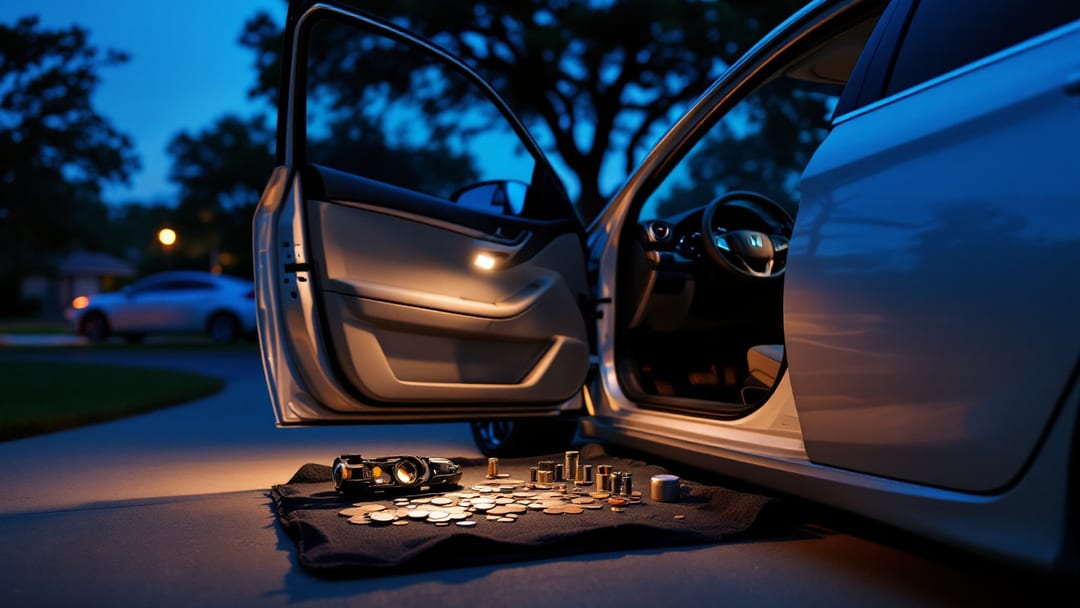
As of July 2026, Honda Civic ignition repair in Arlington runs roughly $165 to $360 on-site depending on whether the fault is a worn lock cylinder or an immobilizer that no longer recognizes your key — call or text (817) 330-5762 before you pay for a tow. The Civic is one of the most common cars on Arlington roads, and it is also one of the most common vehicles where owners buy an ignition switch they never needed. This guide walks the diagnosis the way a technician actually does it, gives real 2026 mobile pricing, and marks the handful of cases where the dealer really is the right stop.
Three failures that all feel identical from the driver's seat
From behind the wheel, a Civic that will not start gives you almost no information. The key turns or it does not. The engine cranks or it does not. Underneath that, three completely different systems can be at fault, and they carry very different bills.
A loaded steering column lock. When you park with the front wheels turned against a curb — extremely common on Arlington's older residential streets where parking is tight — the column lock pin binds against the steering shaft. The key then refuses to rotate. Nothing is broken. This is the single most common "my ignition failed" call that turns out to be free.
A worn key or worn cylinder. Civic keys live in pockets and on crowded rings for a decade. The brass cuts round off a few thousandths at a time, and the wafers inside the cylinder wear to match. Eventually the two no longer line up. The symptom creeps in gradually: the key needs jiggling, then jiggling plus pressure, then it stops working entirely. Owners almost always describe the failure as sudden because the last few weeks of decline blend together.
An immobilizer rejection. Every Civic from the early 2000s forward carries a transponder chip in the key that must be recognized before the engine control module will deliver fuel. When that handshake fails, the starter still cranks, the engine still turns over, and it still will not run. The tell is the green key icon on the dash flashing rather than going out. That is an anti-theft event, not a mechanical one, and no amount of ignition switch replacement will fix it.
Sorting those three apart before anyone orders a part is the cheapest step in the entire process. If you want the general version of that decision tree across every make we work on, our guide to ignition switch repair versus replacement lays it out in detail.
What Civic ignition work costs in Arlington in 2026
These are real mobile ranges for the Arlington market. Every one of them assumes you can show proof of ownership before work starts — a locksmith who skips that step is a locksmith to walk away from.
| Honda Civic Ignition Job | Typical Symptom | Cost Range (Arlington) | Time On-Site |
|---|---|---|---|
| Lock cylinder rebuild or replace, rekeyed to your key | Key sticks, needs jiggling, or won't turn at all | $165 – $290 | 45 – 90 min |
| Cylinder replace + transponder key cut and programmed | Original key too worn to copy | $240 – $360 | 60 – 110 min |
| Broken key extraction from the ignition | Blade snapped off in the cylinder | $85 – $175 | 20 – 45 min |
| Immobilizer diagnosis + key reprogramming | Cranks, won't run, green key light flashing | $130 – $250 | 30 – 60 min |
| All keys lost — origination + programming | No working key at all | $250 – $420 | 60 – 120 min |
The spread inside each row is driven by real variables rather than guesswork: the model year and how much column trim has to come apart, whether a fresh key has to be originated, and whether the anti-theft system needs a relearn cycle afterward. A short call with your year and the exact symptom collapses that range into a firm number.
The diagnosis, step by step
You can run most of the first stage yourself in the driveway, and it costs nothing.
Step one — unload the column. Put light rotational pressure on the key, then rock the steering wheel left and right. If the key suddenly turns, the column lock was binding and there is no repair to buy.
Step two — try the spare. This is the single most diagnostic test available to an owner. If the spare key turns and starts the car and the daily key does not, the problem is a worn key, and the fix is a fresh cut rather than an ignition. If both keys behave the same way, the fault is in the vehicle.
Step three — watch the immobilizer light. Turn the key to the run position without cranking. The green key or immobilizer icon should illuminate briefly and then go out. If it stays lit or flashes, the chip handshake failed. If it goes out normally and the engine still will not fire, you are looking at a fuel, spark or starting fault rather than a security fault.
Step four — feel the return spring. Turn the key to accessory and let go. It should snap back crisply. A lazy or mushy return is a worn cylinder telling you it has limited life left, even if it is still working today.
"The most expensive mistake in ignition work is replacing hardware to chase a symptom that came from the key. Test the spare before you buy anything — it separates a $30 key cut from a $300 repair in about fifteen seconds." — lead technician, Arlington TX Locksmith
Only after those four checks does a technician start pulling trim. On most Civic generations the lower steering column shroud comes off, the retaining pin is depressed through an access hole, and the cylinder slides out. The replacement is then rekeyed on the spot so your existing key still works.
Why Civic immobilizer faults are so often misdiagnosed
Honda's immobilizer has been quietly reliable for two decades, which is exactly why the failure mode confuses people. When it does misbehave, three causes dominate.
The first is a damaged transponder chip. A key that has been dropped hard, run through a wash cycle, or lived on a ring with a heavy fob can crack the chip's tiny antenna coil. The blade still turns the cylinder perfectly, so the mechanical side looks fine.
The second is a failing immobilizer ring antenna — the coil that wraps the cylinder and reads the chip. When it degrades, recognition becomes intermittent: the car starts on the third try, then the tenth, then not at all. Owners describe this as the ignition "going bad" because the pattern is progressive.
The third is a low battery. A weak battery can drop voltage far enough during cranking that the immobilizer module resets mid-handshake. The car cranks strongly enough to sound healthy and still refuses to run. Checking battery health before condemning anything electronic is standard practice for a reason.
If your Civic's symptom is a dead or unresponsive remote rather than a no-start, that is a different diagnosis entirely — our breakdown of key fob battery versus a genuinely dead fob covers what to test first. The general anti-theft architecture, including why the same symptom looks different across manufacturers, is explained in our overview of immobilizer and ECU programming.
The National Highway Traffic Safety Administration documents why immobilizers became standard equipment in the first place: electronic engine-disable systems substantially reduce the rate at which a vehicle can be driven away. That security benefit is real, and the tradeoff is that a transponder problem now strands you in exactly the way a mechanical failure once did.
Which Civic generation you own changes the job
The Civic has been in continuous production long enough that "Civic ignition" covers several distinct designs.
Late-1990s and early-2000s cars use a straightforward mechanical cylinder with an early transponder system. These are the fastest jobs and the cheapest, and because the vehicles are older, worn cylinders are the dominant failure.
Mid-2000s through mid-2010s cars keep the mechanical cylinder but add a more capable immobilizer and, on many trims, a remote head key that combines the blade and the buttons in one body. When that combined key gets damaged, owners often notice the remote functions failing before the start function does.
Owners of the larger Hondas in the same driveway often ask whether the advice carries across — broadly it does, and our guide to Odyssey and Pilot spare keys covers the key side for those models specifically.
Later Civics with push-button start removed the cylinder altogether. There is nothing mechanical to wear out. A no-start on these is a fob recognition problem, a coin-cell battery, a brake switch, or a security lockout — and the repair is diagnostic and electronic rather than mechanical. Anyone quoting you a "new ignition switch" for a push-button Civic without a diagnosis is guessing.
Independent repair-cost references such as Kelley Blue Book's repair guidance and Edmunds' maintenance library are useful for sanity-checking any quote you receive, though neither reflects the mobile-service savings of skipping a tow.
When the dealer is genuinely the right call
Being honest about limits is part of the job. Take a Civic to the Honda dealer when the engine control module itself has failed and needs replacement plus factory initialization, when the vehicle is under warranty for a related component, or when there is an open recall touching the ignition or starting system. You can check the second of those for free by entering your VIN at NHTSA's recall lookup.
Outside those cases, mobile locksmith work is faster and cheaper for the same result. The National Automotive Service Task Force exists precisely because independent technicians need legitimate access to the security information required to service modern vehicles, and that framework is what makes driveway immobilizer work possible at all.
In Texas, locksmith companies are regulated by the Texas Department of Public Safety Private Security Program — not by TDLR, despite what a lot of low-quality directory pages claim. Ask any company you call how they are regulated. A confident, correct answer is a useful signal.
Getting help in Arlington
Civic ignition work is squarely mobile work. We cover downtown Arlington, the UTA area where a Civic-heavy student population makes this one of our most frequent calls, and the I-20 corridor where a car that will not start in a shopping center lot needs an on-site fix rather than a flatbed.
If the key snapped off in the cylinder rather than simply refusing to turn, that is a different and usually cheaper job — see our broken key extraction service. If you are locked out rather than dealing with a start failure, car lockout service is the right page. And if you need a working key today because every copy is gone, our guide to same-day car key replacement explains what that process looks like start to finish.
Call or text (817) 330-5762 with your Civic's year and the exact symptom — key won't turn, cranks but won't run, or nothing at all — and you will get a real number rather than a range. You can also reach us through the contact page if you would rather write it out.
Frequently Asked Questions
How much does Honda Civic ignition switch repair cost in Arlington TX in 2026?
As of July 2026, most Civic ignition work in Arlington runs about $165 to $360 on-site. Rebuilding or replacing a worn lock cylinder and rekeying it to your existing key sits at the low end. Cases that also need a key originated and the immobilizer relearned sit at the top end. A phone diagnosis with your year and symptom usually narrows that to a firm number in a few minutes.
Why won't my Honda Civic key turn in the ignition?
Three causes account for nearly every case: the steering column lock is loaded against the wheel, the key blade is worn round, or the lock cylinder wafers are worn. Try rocking the steering wheel gently while turning the key with light pressure. If it frees, the column lock was binding. If the key still refuses with the wheel loose, the wear is in the key or the cylinder.
My Civic cranks but won't start and the green key light is flashing. Is that the ignition?
No. A flashing green key or immobilizer light means the car's anti-theft system did not recognize the transponder chip in your key, so it cuts fuel even though the starter turns. That is a key or immobilizer problem, not a mechanical ignition problem. Replacing the ignition switch in that situation spends money without fixing anything.
Can a mobile locksmith replace a Civic ignition in my driveway?
Yes for the large majority of jobs. Cylinder removal, replacement, rekeying the new cylinder to your existing key, key origination and immobilizer relearn are all driveway work with the right equipment and software. The dealer becomes the right call only when a control module itself has failed or the vehicle needs a factory-only operation.
Will I need a new key after Civic ignition repair?
Usually not. A good locksmith rekeys the replacement cylinder to the key already in your pocket, so nothing about your daily routine changes and your spare keeps working. A fresh key is only required when the original is too worn to serve as a cutting pattern, when every key is lost, or when the cylinder supplied cannot be rekeyed.
How long does a Honda Civic ignition repair take on-site?
Plan on 45 to 90 minutes for a straightforward lock cylinder replacement on most Civic generations. Add roughly 20 to 40 minutes when a key has to be cut and programmed, and a little more on models where the steering column shroud and lower dash trim have to come apart to reach the retaining pin.
Is a locksmith cheaper than the Honda dealer for ignition work?
Generally yes, and the gap widens when the car will not start at all. The dealer route means paying for a tow plus waiting for a service appointment. A mobile locksmith diagnoses and repairs in your driveway or a parking lot in one visit, which removes the tow from the bill entirely and usually gets you moving the same day.