Work Van & Fleet Vehicle Lockout in Arlington TX — Downtime
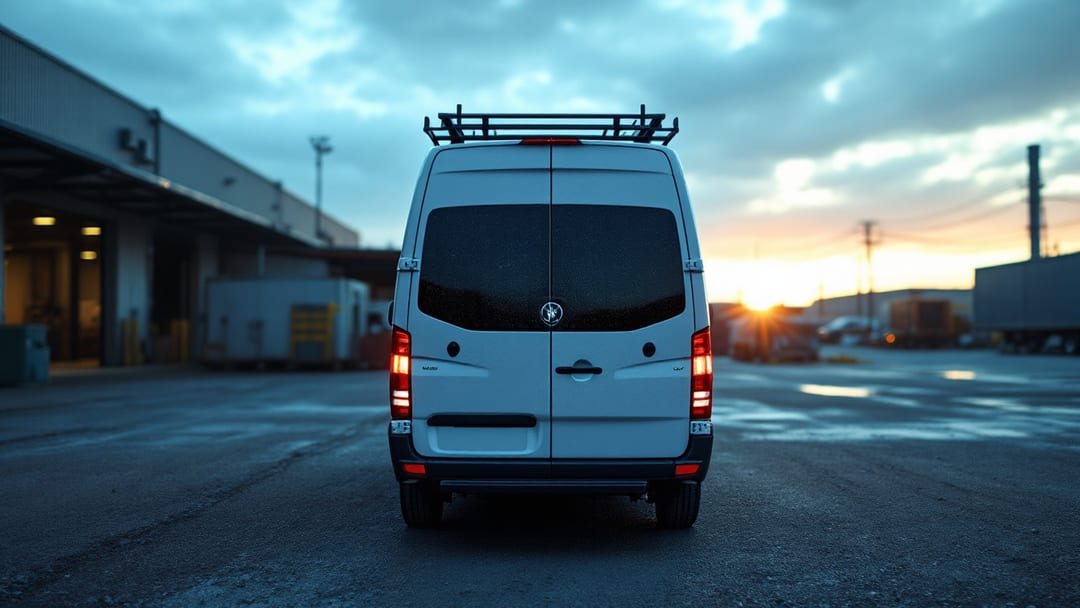
As of August 2026, a work van or fleet vehicle lockout in the Arlington area typically runs $85 to $170 in daylight and $110 to $220 after hours — and the invoice is almost never the expensive part. Call or text (817) 330-5762 if a crew is standing still right now. A locked van stops billable work, blows an appointment window, and frequently costs several times the service call in lost hours. This guide covers how these jobs actually get handled, who is allowed to authorize one, why cargo doors differ from cab doors, and the two cheap measures that stop the pattern repeating.
Why a fleet lockout is a different problem from a personal one
When a family car gets locked, one person is inconvenienced. When a work van gets locked, the whole job stops.
The arithmetic is unforgiving. A two-hour delay on a three-person crew is six labor hours. Add a missed appointment window, a customer who has to be rescheduled, and in some trades a permit or inspection slot that cannot be moved, and the true cost of a $120 lockout is regularly five to ten times that figure. The Bureau of Labor Statistics data on employer costs for employee compensation is a reasonable place to see what an hour of skilled field labor actually costs a business once everything is loaded in.
That is why the right question for a fleet is never "what does a lockout cost." It is "how fast can we be moving again, and how do we stop this recurring."
Who can authorize entry to a company vehicle
This is the step that most often delays a commercial call, and it is worth understanding before it happens to you.
A locksmith opening any vehicle has to establish that the person requesting it is entitled to be in it. On a personal car, that is registration and photo identification. On a company vehicle, the driver frequently has neither — the registration is in a company name and lives in a file at an office.
Workable proof normally looks like one of these: the assigned driver with company identification and the vehicle clearly matching, or a reachable owner or manager who confirms authorization by phone, or documentation showing the company owns the vehicle and the caller works for it.
The genuinely efficient answer for a fleet is to set this up once, in advance. An authorized-caller list — names, phone numbers, and the vehicles they may authorize — removes the entire conversation from every future call. It takes ten minutes to establish and saves twenty on each incident.
"The delay on commercial calls is almost never the lock. It is spending fifteen minutes finding somebody with authority to say yes at seven in the morning." — lead technician, Arlington TX Locksmith
Cab doors, slide doors and cargo areas are three different jobs
Owners often assume a van is a van. The hardware disagrees.
The cab door is broadly similar to a car door and is standard non-destructive entry work. This is the most common request and the quickest.
A sliding side door has different geometry and different linkage, and on many vans it cannot be approached the same way as a cab door. It is normal work but it is not the same work.
Rear cargo or barn doors vary the most. Factory hardware is generally serviceable. What complicates things is everything added afterwards — hasps, aftermarket deadbolts, slam locks fitted by an upfitter or a previous owner. Some of those are excellent security hardware, and excellent security hardware is by definition harder to bypass. That is not a failure; it is the product working.
Box trucks and specialty bodies are their own category, particularly where the body was fitted by a third party. Describe what you actually have on the vehicle when you call, because that determines what arrives.
Arlington cost ranges for commercial vehicle lockouts in 2026
Real numbers for this market. Authorization and identification are required before any vehicle is opened.
| Situation | Typical Arlington range (2026) | Notes |
|---|---|---|
| Cab door, weekday daytime | $85 – $150 | Standard non-destructive entry |
| Cab door, after hours or weekend | $110 – $200 | After-hours rate applies |
| Sliding side door | $100 – $180 | Different linkage, more time |
| Rear cargo or barn doors, factory hardware | $110 – $200 | Vehicle-dependent |
| Aftermarket security hardware fitted | Assessed on site | Has to be seen before quoting |
| Fleet spare-key batch, per vehicle | Quoted by fleet size | Substantially cheaper as a batch |
Two notes. The aftermarket row is honest rather than evasive — nobody can price hardware they have not seen, and a company that quotes a firm number for unknown security hardware over the phone is planning to revise it in your yard. And the last row is the one that actually saves money over a year.
The prevention that pays for itself
Two measures cover the overwhelming majority of fleet lockouts, and both are cheap relative to a single lost afternoon.
Cut a spare for every vehicle and store the set centrally. Not in the vehicle — a spare inside the van solves nothing. A labelled board in a locked office cabinet, or a set held by a supervisor, converts a lockout from a service call into a thirty-minute errand. Doing this as a batch across the fleet is meaningfully cheaper per vehicle than doing it one at a time, because the setup cost is shared across the visit.
Standardize the habit that keeps breaking. In practice, nearly every fleet lockout traces to the same two moments: keys set down on a seat or a wheel arch during loading, or a vehicle left running with the doors locked. A crew rule that keys go from the ignition to a pocket and nowhere else eliminates most of it.
Worth adding for older vehicles: a van whose ignition key has started needing a jiggle is on a clock. Ford Super Duty, Transit and work-truck fleet keys covers the key side of fleet ownership, and ignition switch repair versus replacement covers when a worn cylinder becomes a stranded vehicle. On a work vehicle that failure does not just inconvenience a driver — it parks an asset.
The U.S. Small Business Administration's guidance on managing business operations is a reasonable framework for treating this as a scheduled maintenance item rather than a recurring emergency.
The running-vehicle version, which should be treated as urgent
A van locked while running is a specific case worth naming.
It happens most in summer, when a crew leaves the air conditioning going and the doors lock behind them. It is simultaneously a fuel cost, a theft exposure and — if the vehicle is on a slope or near people — a safety issue.
Say explicitly that the vehicle is running when you call, so it is prioritized correctly. And if anyone is inside a locked vehicle in North Texas heat, call 911 before anything else; interior temperatures climb faster than most people expect, as the National Highway Traffic Safety Administration's heatstroke material documents.
Choosing a provider for commercial work
Fleets are quoted differently from consumers, and mostly that is good — a known rate beats a negotiation at seven in the morning. A few filters:
Ask for a standing rate card rather than a per-call quote. A company that works with fleets should be able to state cab-door, slide-door and after-hours rates without hesitating.
Ask about authorized-caller setup. If they have never heard of it, they do not do much fleet work.
Get the trip charge in writing. Especially for calls that turn out not to need entry.
Check the regulator claim. Texas locksmith companies are regulated by the Texas Department of Public Safety Private Security Program, not TDLR. Naming the wrong agency is a meaningful signal.
The general bait-and-switch pattern — a very low phone number followed by a much larger invoice once work has started — is described directly in the Federal Trade Commission's guidance on avoiding locksmith scams, and crews under time pressure are an easy target for it. Our guide to avoiding locksmith scams in Arlington covers the rest.
While you have VINs in front of you for a fleet review, an open-recall check through NHTSA across the fleet is free and occasionally surfaces something relevant to latch or door hardware.
Getting help in Arlington
We come to the vehicle, which for commercial work usually means a job site, a yard or a customer's driveway. That covers east Arlington, south Arlington, the I-20 corridor and the Highway 360 corridor.
Car lockout service covers vehicle entry, and emergency lockout covers urgent and after-hours calls. If a key snapped in a cargo lock or an ignition, broken key extraction is the right starting point. If a vehicle is stranded rather than locked, lost car key with no spare and same-day car key replacement cover what can realistically be done in a single visit.
Call or text (817) 330-5762 with the vehicle type, which door, and whether it is running. If you manage several vehicles, ask about a spare-key batch and an authorized-caller list while you have us on the phone — that conversation is usually the one that stops the calls. The contact page works for anything not urgent.
Frequently Asked Questions
How much does a work van lockout cost in Arlington TX?
As of August 2026, a commercial van or truck lockout in the Arlington area typically runs $85 to $170 during the day and $110 to $220 after hours. Cargo and box-truck rear doors often sit slightly higher than a cab door because the lock hardware is different and access takes longer. You should get a firm number on the phone before dispatch, and for fleet accounts that number should be a known rate rather than a negotiation.
Who can authorize a locksmith to open a company vehicle?
Someone who can demonstrate authority over the vehicle — typically the driver assigned to it with company identification, or an owner or manager reachable by phone who can confirm it. We ask because opening a commercial vehicle for the wrong person is a serious problem for everyone involved. Fleets that set up an authorized-caller list in advance skip this conversation entirely on every future call.
Can you open the cargo area of a van, not just the cab?
Usually yes, though it depends on the vehicle and how the cargo area is secured. Factory rear and slide-door locks are generally serviceable with non-destructive entry. Aftermarket security hardware — added hasps, deadbolts, or slam locks fitted by a previous owner or an upfitter — varies enormously, and the honest answer for those is that it has to be seen. Describe what is on the vehicle when you call.
What does a lockout actually cost a working crew?
Far more than the locksmith invoice. A two-hour delay on a three-person crew is six labor hours plus a missed appointment window and often a rescheduled customer. That is why fleets that treat lockouts as a scheduling problem rather than a service problem end up spending less. The invoice is the visible cost; the stopped crew is the real one.
How do fleets stop this from happening every month?
Two measures cover almost all of it. Cut a spare key for every vehicle and store the set centrally rather than in the vehicles themselves, so a lockout becomes a thirty-minute errand instead of a service call. And standardize the habit that gets broken most — keys leave the ignition and go in a pocket, never on a seat or a wheel arch. Neither costs much compared with a single lost afternoon.
Are keys locked in a running van a different situation?
Yes, and it should be treated as urgent. A vehicle running unattended with the doors locked is a fuel, safety and theft exposure at the same time, and on a job site it can be all three at once. Say so when you call so it is prioritized properly. It is also one of the more common versions of this call, particularly in summer when crews leave the air conditioning running.
Can you make spare keys for a whole fleet at once?
Yes, and doing it as a batch is considerably cheaper per vehicle than one at a time because the setup is shared across the visit. The practical requirements are proof of ownership for the vehicles and a location where they can be gathered or visited in sequence. Most fleets that do this once find the first prevented lockout has already paid for it.